Short Answer
This guide explores the enduring allure of the Tarot of Marseilles, one of the oldest and most influential tarot traditions. You’ll discover its historical roots, symbolic depth, and why it continues to captivate readers centuries after its creation. Whether you’re a seasoned tarot enthusiast or a curious newcomer, this exploration will illuminate the deck’s unique place in esoteric history and modern practice.
The Origins and History of the Tarot of Marseilles
The Tarot of Marseilles traces its lineage to 15th-century Europe, emerging during a period of cultural and intellectual upheaval. Unlike later decks designed for divination, the Marseilles tarot was initially a playing card deck, likely used in games like Tarocchi in Italy before spreading to France. The name “Marseilles” refers to the French port city that became a hub for tarot production in the 17th and 18th centuries, where artisans refined the deck’s iconic imagery.
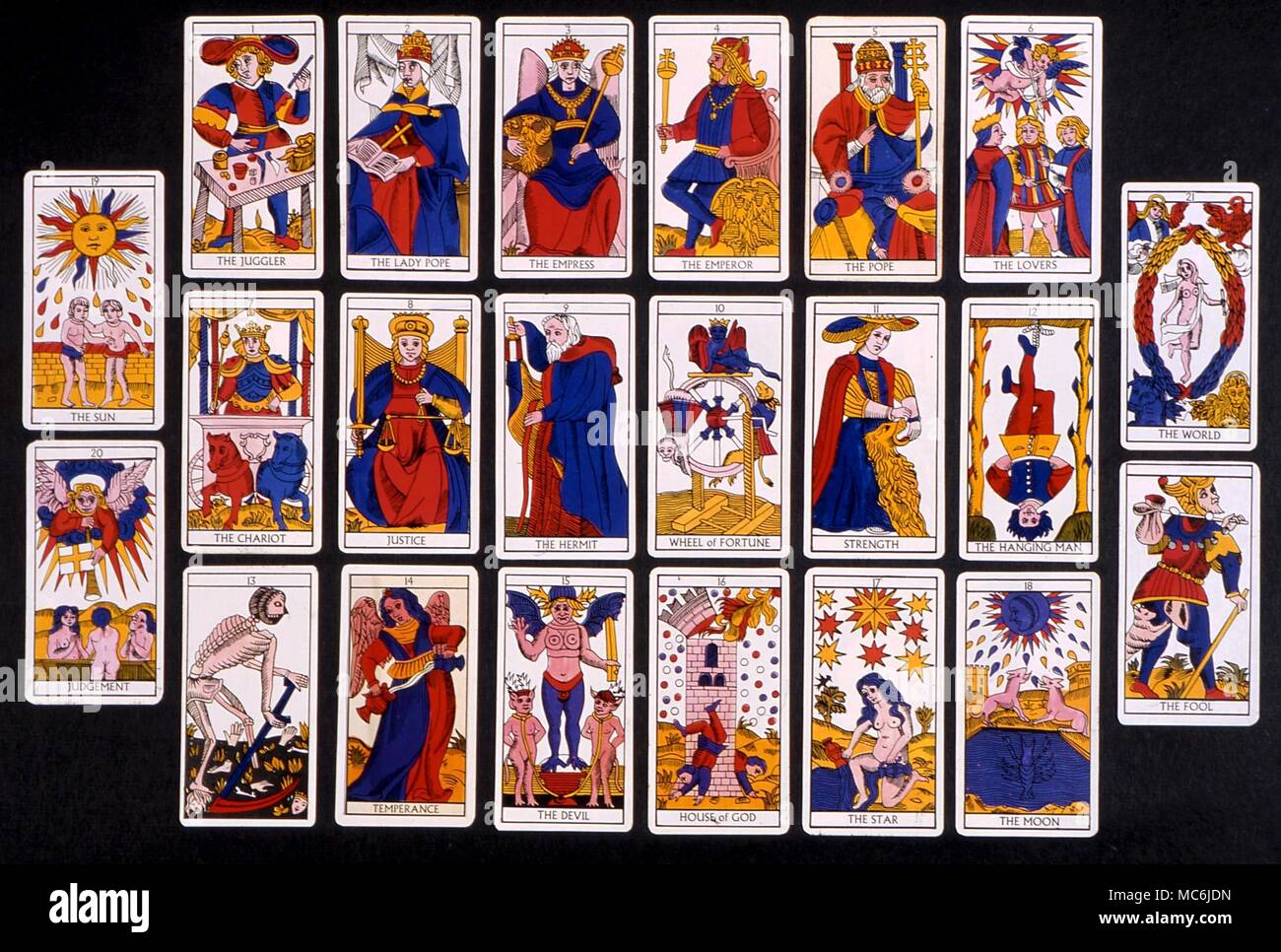
The deck’s structure—comprising 22 Major Arcana cards and 56 Minor Arcana suits (Cups, Swords, Coins, and Batons)—reflects medieval symbolism, blending Christian, alchemical, and folk traditions. The lack of elaborate illustrations in early versions (compared to later Rider-Waite decks) was intentional, allowing readers to project their own interpretations onto the stark, symbolic images. This minimalist approach has contributed to the deck’s longevity, as it invites personal and intuitive engagement rather than rigid dogma.
Key Features of the Tarot of Marseilles Deck
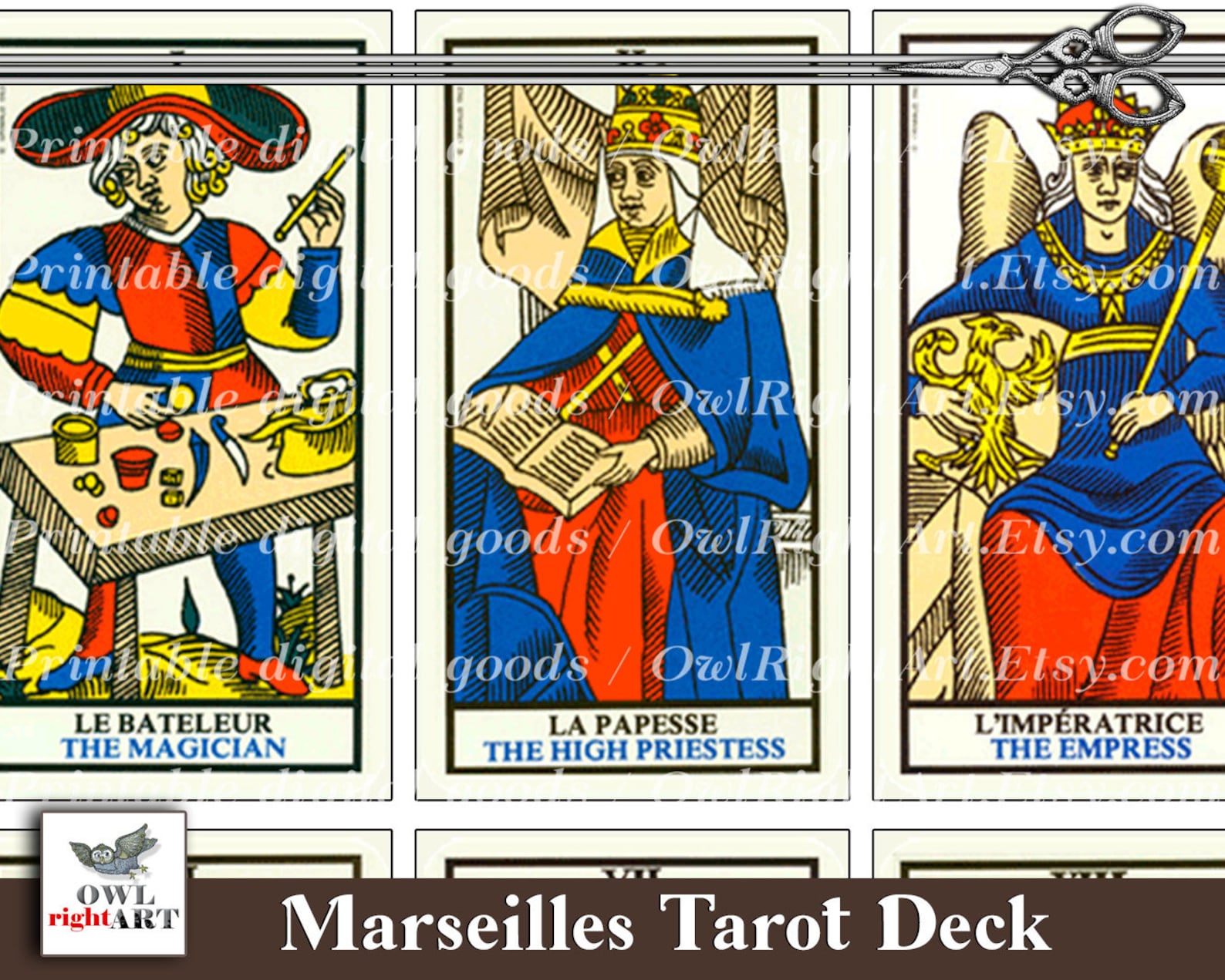
The Tarot of Marseilles is distinguished by its visual and structural characteristics, which set it apart from other tarot traditions. The Major Arcana cards, such as The Fool, The Lovers, and Death, feature simple, archetypal imagery devoid of elaborate scenery. For example, The Fool is often depicted as a wandering figure with a small dog, a staff, and a bag, symbolizing spontaneity and potential. The Minor Arcana, meanwhile, uses traditional suit symbols (hearts, swords, coins, and clubs) without the illustrative scenes found in the Rider-Waite-Smith deck.
Another defining feature is the numbering of the Major Arcana. While most modern decks follow the order popularized by the Rider-Waite-Smith tradition, the Marseilles deck often presents Strength as card VIII and Justice as card XI—a reversal that carries esoteric significance. Some scholars argue this reflects older numerological systems or even the influence of medieval Christian iconography, where virtues like strength and justice were prioritized in a specific sequence.
Symbolism and Esoteric Meaning
The Tarot of Marseilles is renowned for its rich symbolism, which has made it a favorite among occultists, artists, and psychologists alike. Each card serves as a mirror to the human experience, encapsulating universal themes such as love, conflict, transformation, and fate. For instance, The Tower (often numbered XVI or XVII in Marseilles decks) depicts a crumbling structure struck by lightning, symbolizing sudden upheaval and the collapse of illusions—a theme resonant in both spiritual and psychological contexts.
The deck’s imagery also reflects alchemical and astrological influences. The suit of Cups, for example, is associated with water and the emotional realm, while Swords correspond to air and intellect. The Fool’s journey through the Major Arcana mirrors the alchemical process of transformation, from base matter (the uninitiated Fool) to spiritual enlightenment (The World). This depth of symbolism has led many to view the Tarot of Marseilles not just as a divination tool, but as a visual language for understanding the human psyche and the mysteries of existence.

Why the Tarot of Marseilles Remains Fascinating
A common observation about the Tarot of Marseilles is its enduring appeal despite the prevalence of more visually elaborate decks. One reason for this fascination lies in its raw, unfiltered symbolism. Unlike decks that incorporate narrative scenes (e.g., the Rider-Waite-Smith’s The High Priestess sitting between two pillars), the Marseilles cards present archetypes in their purest form. This allows readers to engage with the cards on a more abstract and personal level, interpreting them through their own cultural and psychological lenses.
Another factor is the deck’s historical authenticity. As one of the oldest tarot traditions still in use, the Marseilles deck connects modern practitioners to a lineage of mystics, artists, and scholars who have shaped esoteric thought. Its minimalist aesthetic also makes it a favorite among artists and designers, who appreciate its graphic simplicity and timeless appeal. Additionally, the deck’s lack of rigid interpretations encourages creativity, making it a versatile tool for both divination and meditation.
The Tarot of Marseilles also resonates with contemporary spiritual seekers because of its emphasis on archetypal wisdom. In an era where information is abundant but meaning often feels elusive, the deck offers a framework for exploring life’s fundamental questions. Whether used for personal reflection, artistic inspiration, or professional readings, the Marseilles tarot provides a bridge between the ancient and the modern, the concrete and the mystical.
How to Use the Tarot of Marseilles Today
Using the Tarot of Marseilles effectively requires an understanding of its unique language. Unlike decks with detailed illustrations, the Marseilles tarot demands that readers rely more heavily on intuition and traditional symbolism. For beginners, it’s helpful to study the cards individually, noting the recurring motifs (e.g., the sun, the moon, the tower) and their possible meanings. Many practitioners recommend keeping a journal to track interpretations and observe how the cards relate to personal experiences.
The deck can be used for a variety of purposes, from traditional divination to creative exercises. For divination, spreads like the Celtic Cross or simple three-card readings can provide insight into past, present, and future situations. The Marseilles tarot is also well-suited for meditation, where each card can serve as a focal point for contemplation. Some artists use the deck as a source of inspiration, sketching or painting their own interpretations of the archetypes.
It’s worth noting that the Marseilles tarot’s lack of elaborate imagery can be challenging for those accustomed to more narrative decks. However, this challenge is also its strength—it invites a deeper, more personal engagement with the cards. Over time, readers often find that the deck’s simplicity fosters a stronger connection to the universal themes it represents, making it a powerful tool for self-discovery and spiritual growth.
Conclusion
The Tarot of Marseilles endures as a testament to the power of archetypal imagery and symbolic depth. Its historical roots, minimalist design, and rich esoteric tradition continue to inspire artists, occultists, and seekers around the world. Unlike decks that prioritize visual storytelling, the Marseilles tarot offers a raw, unfiltered connection to the human experience, making it a timeless tool for exploration and insight.
Whether you’re drawn to its historical significance, its psychological resonance, or its artistic simplicity, the Tarot of Marseilles invites you to look beyond the surface and engage with the deeper mysteries of life. In a world where meaning is often obscured by noise, this classic deck remains a beacon of clarity, guiding us toward self-awareness and understanding.
FAQ
What is the Tarot of Marseilles?
The Tarot of Marseilles is one of the oldest tarot traditions, characterized by its minimalist design and rich symbolism, emerging in 15th-century Europe.
How is the Tarot of Marseilles used?
It can be used for divination, meditation, and as a tool for personal reflection, requiring readers to engage with its symbols intuitively.
Leave a Reply