Short Answer
Embark on a journey into the enigmatic world of the Devil Tarot card, where ancient symbolism meets modern introspection. This guide will unravel the esoteric layers of this powerful Major Arcana card, exploring its dual nature as both a warning and a mirror. You’ll discover how the Devil represents the shadow self, the allure of temptation, and the chains that bind the human spirit—while also uncovering the path to liberation. By the end, you’ll see this card not as a harbinger of doom, but as a catalyst for profound self-awareness and transformation.
The Devil Tarot Card: A Symbol of Duality and Shadow
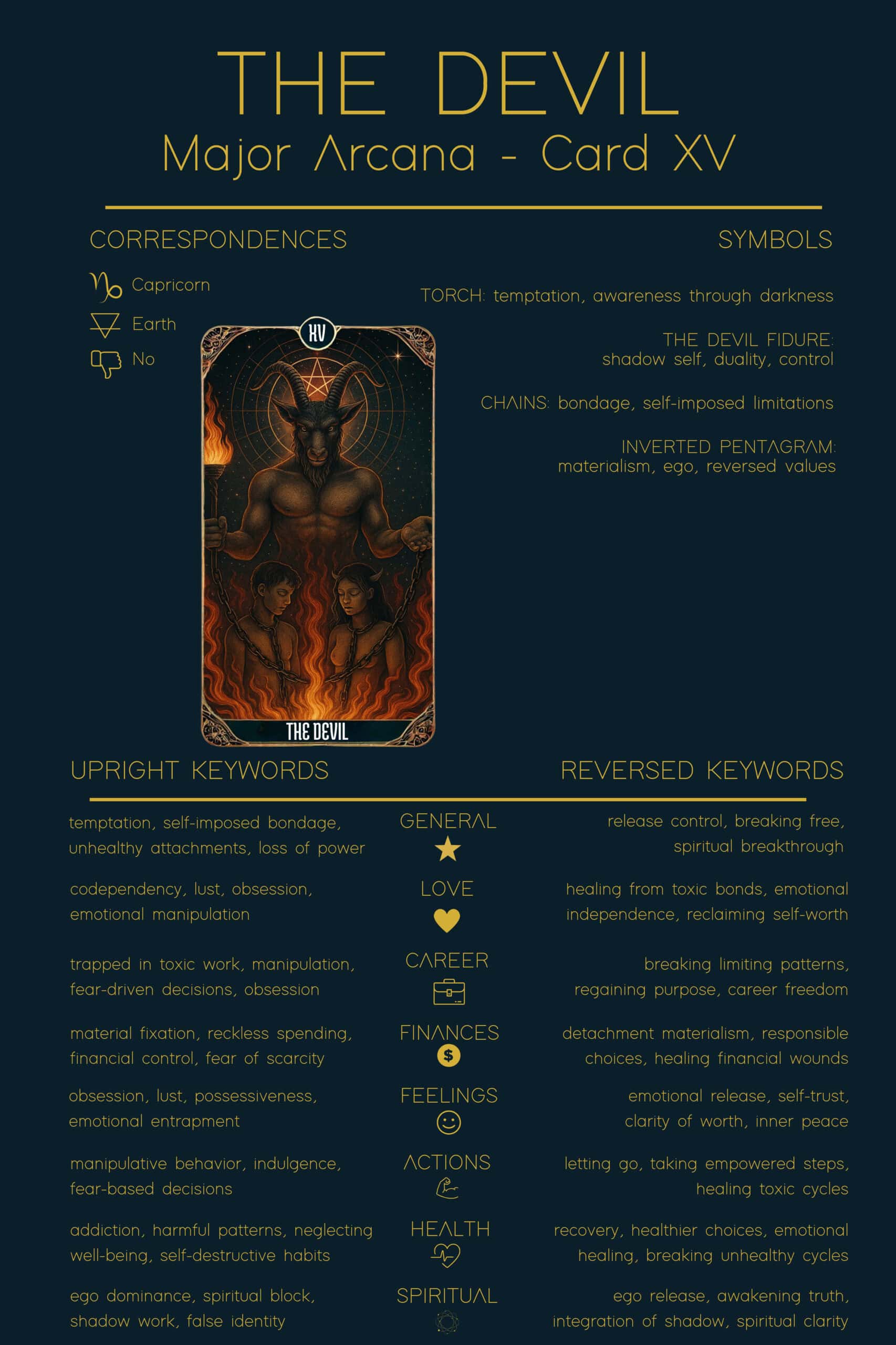
The Devil Tarot card is one of the most visually striking and thematically complex cards in the Major Arcana. At first glance, it evokes fear—depicting a horned figure looming over two chained figures, often with overtly sexual or grotesque imagery. Yet, this card is far more than a mere cautionary tale; it is a profound metaphor for the human experience of temptation, addiction, and the shadows we suppress. The Devil embodies the duality of desire and restraint, freedom and bondage, and the eternal struggle between our higher selves and our baser instincts.
The imagery of the card is rich with esoteric symbolism. The horned figure, often associated with Baphomet or Pan, represents primal energy, instinct, and the untamed aspects of the psyche. The chains binding the figures are loose, suggesting that the captivity is often self-imposed—a metaphor for the illusions and dependencies that keep us from true liberation. The inverted pentagram, flames, and bat-like wings further emphasize the card’s connection to the subconscious, the occult, and the darker corners of the human mind.
Temptation as a Mirror: The Devil’s Esoteric Appeal
The Devil’s allure lies in its ability to reflect our own inner conflicts back to us. Unlike cards that depict external forces of evil, the Devil is a mirror held up to the soul, revealing the chains we forge ourselves. This card invites us to confront the temptations that distract us from our highest potential—whether they be materialism, unhealthy relationships, or self-destructive habits. In esoteric traditions, the Devil is not merely a villain but a teacher, forcing us to ask: What am I willing to sacrifice for temporary pleasure?
Esoterically, the Devil is linked to the element of Earth and the astrological sign of Capricorn, grounding its themes in the material world. It challenges us to examine our relationship with the physical—our bodies, possessions, and desires—and to question whether we are masters of our fate or slaves to our impulses. The card’s energy is not inherently negative; rather, it is a wake-up call, urging us to break free from the illusions that cloud our judgment and to reclaim our agency.
Breaking the Chains: The Path to Liberation
The Devil’s most powerful message is one of liberation. The chains depicted in the card are often depicted as loose or easily broken, symbolizing that the power to free ourselves has always been within our grasp. This card appears in readings to signal a moment of reckoning—a time to acknowledge the habits, relationships, or beliefs that no longer serve us and to take decisive action to release them. Esoterically, this process is akin to the alchemical journey of transformation, where the base metals of our lower nature are transmuted into the gold of higher consciousness.
To harness the Devil’s energy for growth, one must first recognize the specific “chains” in their life. Are you bound by workaholism, escapism, or toxic attachments? The Devil does not judge; it merely reflects. Once identified, the path forward involves conscious choice and discipline. Rituals, meditation, or journaling can help sever these ties, while affirmations and visualization can reinforce the commitment to freedom. In this way, the Devil becomes not a curse, but a catalyst for radical self-mastery.
The Devil in Modern Esotericism: Reclaiming the Shadow
In contemporary esoteric circles, the Devil Tarot card has undergone a renaissance of sorts, shedding its purely negative connotations to embrace a more nuanced interpretation. Modern practitioners view the card as a tool for shadow work—the psychological and spiritual process of integrating the disowned aspects of the self. The Devil, in this context, is not an external enemy but an internal ally, helping us confront the parts of ourselves we fear or deny. This shift aligns with the teachings of Carl Jung, who emphasized the importance of embracing the shadow to achieve wholeness.
The Devil’s imagery has also found resonance in pop culture, from music and film to fashion and art. Its bold, provocative aesthetic makes it a favorite among those drawn to the macabre or the occult. Yet, its true power lies in its ability to provoke introspection. Whether it appears in a tarot spread or as a tattoo, the Devil card serves as a reminder that our greatest struggles often hold the seeds of our greatest growth.
Practical Applications: Working with the Devil’s Energy
For those seeking to work with the Devil’s energy in a practical way, consider the following approaches:
- Shadow Work: Journal about the aspects of yourself you’ve suppressed or denied. What fears, desires, or habits have you been avoiding? The Devil encourages honesty, even when it’s uncomfortable.
- Rituals of Release: Create a ritual to symbolically break free from a limiting belief or habit. This could involve burning a written list of what no longer serves you or burying an object that represents your chains.
- Tarot Spreads: Use the Devil card in spreads focused on addiction, toxic relationships, or self-sabotage. Ask the cards to reveal the root of the issue and the steps needed to reclaim your power.
- Meditation: Visualize the chains around you loosening or breaking. Imagine stepping into a space of freedom and self-acceptance. The Devil’s energy can be a powerful ally in this process.
Remember, the goal is not to eliminate desire or instinct but to transcend the illusions that distort them. The Devil’s lesson is one of balance—acknowledging our shadows without being consumed by them.
Conclusion: The Devil as a Guide, Not a Tyrant
The Devil Tarot card is a paradox—a symbol of both bondage and liberation, fear and fascination. Its esoteric meaning transcends the superficial interpretations of evil, offering instead a mirror to the soul and a challenge to the spirit. By confronting the Devil within, we uncover the chains that bind us and the power to break free. This card does not demand perfection; it invites us to embrace our humanity, with all its complexities and contradictions.
In the end, the Devil is not an enemy to vanquish but a teacher to learn from. It reminds us that temptation is not inherently destructive—it is a call to awareness. The true liberation lies not in avoiding the shadows, but in stepping into the light of self-acceptance. So the next time the Devil appears in a reading or in your life, pause and ask: What is this card trying to show me? The answer may just be the key to your next great transformation.
FAQ
What does the Devil Tarot card symbolize?
The Devil Tarot card symbolizes temptation, inner shadow, bondage, and the potential for liberation through self-awareness and breaking free from illusions.
Is the Devil Tarot card always negative?
No, the Devil card is not inherently negative; it serves as a mirror reflecting self-imposed limitations and a call for transformation and personal growth.
How can I work with the energy of the Devil Tarot card?
You can work with the Devil's energy through shadow work, rituals of release, meditation, and tarot spreads focusing on overcoming addictions and toxic attachments.
What is the significance of the chains in the Devil Tarot card?
The chains represent self-imposed bondage and illusions that limit us, but they are often loose, symbolizing that liberation is possible by recognizing and breaking free from these constraints.
How is the Devil Tarot card connected to astrology and elements?
Esoterically, the Devil is linked to the Earth element and the astrological sign Capricorn, grounding its themes in materialism, desire, and physical reality.
Leave a Reply