Short Answer
Welcome to your comprehensive guide to the Thoth Tarot, a mystical and visually striking deck created by the legendary occultist Aleister Crowley and artist Lady Frieda Harris. In this guide, you’ll explore the origins, symbolism, structure, and practical uses of this iconic tarot system. Whether you’re a seasoned tarot reader or a curious newcomer, you’ll gain valuable insights into the Thoth Tarot’s unique philosophy, its Major and Minor Arcana, and how it differs from other decks. By the end, you’ll understand why the Thoth Tarot is revered as one of the most profound and esoteric tarot systems in existence.
The Origins and History of the Thoth Tarot
The Thoth Tarot was conceived in the early 20th century as a collaboration between Aleister Crowley, a mystic and ceremonial magician, and Lady Frieda Harris, a talented artist and occultist. Crowley, already a prominent figure in the Hermetic Order of the Golden Dawn, sought to create a tarot deck that embodied his esoteric teachings, particularly those outlined in his magnum opus, Liber AL vel Legis (The Book of the Law). The deck was designed to reflect Crowley’s deep understanding of Kabbalah, astrology, alchemy, and ceremonial magic.
The creation of the Thoth Tarot spanned over five years, from 1938 to 1943, with Harris meticulously painting each card based on Crowley’s detailed instructions. The deck was not published during Crowley’s lifetime due to financial constraints and the complexities of the project. It wasn’t until 1969, decades after Crowley’s death, that the Thoth Tarot was finally released to the public by the Ordo Templi Orientis (OTO), the magical order Crowley co-founded. Today, the Thoth Tarot is celebrated as a masterpiece of esoteric art and a cornerstone of modern tarot practice.

Understanding the Philosophy Behind the Thoth Tarot
The Thoth Tarot is more than just a divination tool; it is a symbolic representation of Crowley’s magical worldview. At its core, the deck is rooted in the principles of Thelema, the spiritual philosophy Crowley developed, which emphasizes the pursuit of one’s True Will—the divine purpose of an individual. The Thoth Tarot serves as a map for navigating the complexities of the human experience, blending ancient wisdom with Crowley’s innovative insights.
One of the most distinctive aspects of the Thoth Tarot is its departure from traditional tarot symbolism. While the Rider-Waite-Smith deck, for example, draws heavily from Christian iconography, the Thoth Tarot incorporates elements from Egyptian mythology, astrology, and Kabbalah. Crowley reimagined the traditional tarot structure, renaming some cards and altering their meanings to align with his magical system. For instance, the card traditionally known as “Strength” is renamed “Lust” in the Thoth Tarot, reflecting Crowley’s reinterpretation of its esoteric significance.
The Thoth Tarot also places a strong emphasis on the interplay between opposites—light and dark, masculine and feminine, spirit and matter. This duality is reflected in the deck’s artwork, which often features stark contrasts and intricate details that invite deep contemplation. By engaging with the Thoth Tarot, readers are encouraged to explore the balance between these forces within themselves and the universe.
The Structure of the Thoth Tarot: Major and Minor Arcana
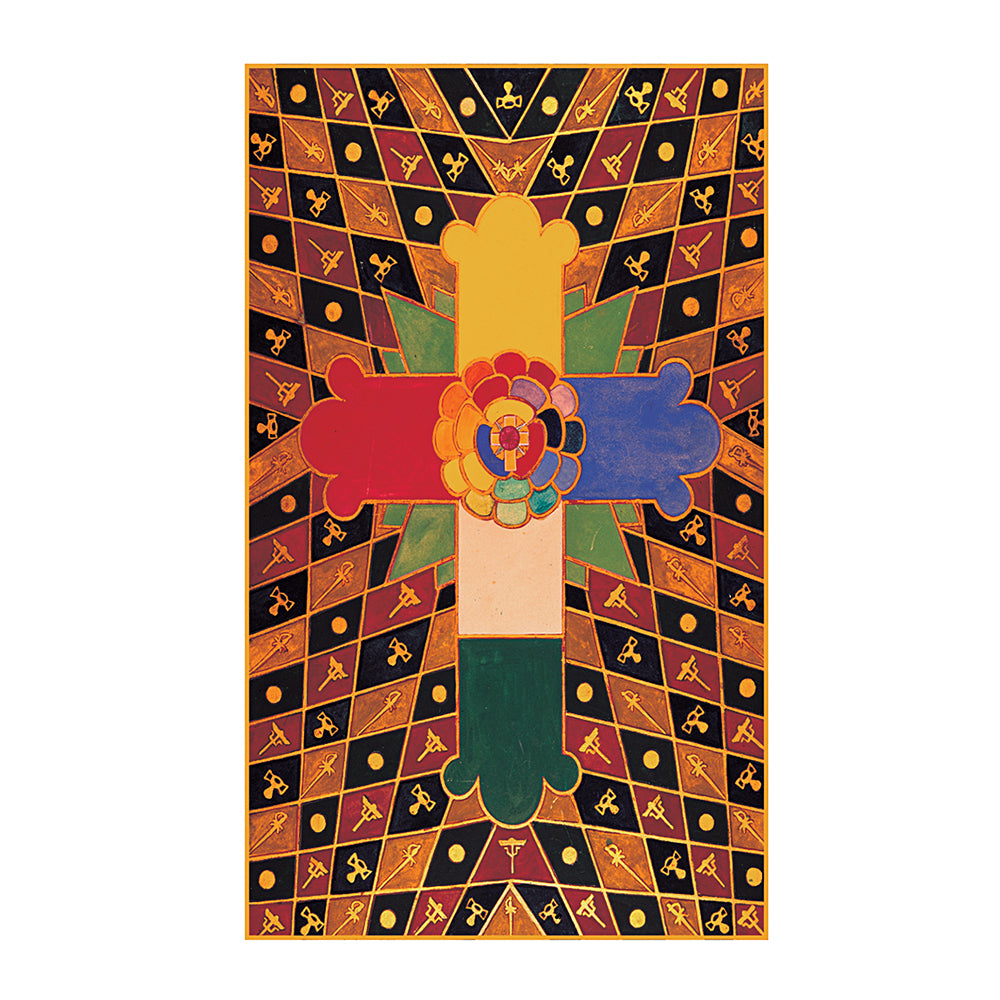
The Thoth Tarot consists of 78 cards, divided into the Major Arcana and the Minor Arcana, each with its own unique symbolism and purpose.
Major Arcana
The Major Arcana, also known as the “Keys,” comprises 22 cards that represent significant spiritual lessons and archetypal energies. Each card in the Major Arcana corresponds to a path on the Kabbalistic Tree of Life, a central concept in Crowley’s magical system. The Major Arcana cards in the Thoth Tarot include:
- The Fool (0): Represents new beginnings, spontaneity, and the journey toward self-discovery.
- The Magus (I): Symbolizes manifestation, willpower, and the ability to harness magical forces.
- The High Priestess (II): Embodies intuition, mystery, and the subconscious mind.
- The Empress (III): Represents fertility, abundance, and the nurturing aspects of nature.
- The Emperor (IV): Symbolizes authority, structure, and the masculine principle.
- The Hierophant (V): Represents tradition, spiritual guidance, and the transmission of wisdom.
- The Lovers (VI): Explores themes of love, choice, and the union of opposites.
- The Chariot (VII): Signifies determination, victory, and the mastery of opposing forces.
- Adjustment (VIII, traditionally “Justice”): Reflects balance, karma, and the consequences of actions.
- The Hermit (IX): Embodies introspection, solitude, and the search for inner wisdom.
- Fortune (X): Represents cycles, change, and the ever-turning wheel of life.
- Lust (XI, traditionally “Strength”): Explores passion, desire, and the transformative power of raw energy.
- The Hanged Man (XII): Symbolizes surrender, sacrifice, and the reversal of perspective.
- Death (XIII): Represents transformation, endings, and rebirth.
- Art (XIV, traditionally “Temperance”): Embodies alchemy, balance, and the fusion of opposites.
- The Devil (XV): Explores bondage, materialism, and the shadow self.
- The Tower (XVI): Symbolizes sudden upheaval, revelation, and the collapse of illusions.
- The Star (XVII)
- The Moon (XVIII): Embodies illusion, intuition, and the subconscious mind.
- The Sun (XIX): Symbolizes joy, vitality, and the triumph of the light.
- The Aeon (XX, traditionally “Judgement”): Represents rebirth, awakening, and the call to higher consciousness.
- The Universe (XXI): Embodies completion, wholeness, and the infinite cycle of existence.
: Represents hope, inspiration, and the connection to the divine.
Minor Arcana
The Minor Arcana consists of 56 cards divided into four suits: Wands, Cups, Swords, and Disks. Each suit corresponds to an element and a range of life experiences:
- Wands (Fire): Represent creativity, passion, ambition, and personal growth.
- Cups (Water): Symbolize emotions, relationships, intuition, and the subconscious.
- Swords (Air): Embrace intellect, conflict, communication, and decision-making.
- Disks (Earth): Reflect material wealth, practicality, health, and the physical world.
Each suit contains 14 cards: Ace through 10, and four Court Cards (Page, Knight, Queen, King). The Thoth Tarot’s Minor Arcana cards are rich in astrological and Kabbalistic symbolism, offering layers of meaning for those who delve deeper into their interpretations.

Practical Uses of the Thoth Tarot
The Thoth Tarot is not only a tool for divination but also a gateway to magical practice and self-discovery. Here are some of the ways you can use the deck:
Divination and Tarot Readings
The Thoth Tarot excels as a divination tool, offering nuanced insights into personal and spiritual questions. Its complex symbolism allows for deep and layered interpretations, making it ideal for those seeking more than surface-level answers. When performing a reading, consider the following approaches:
- Single-Card Draws: Perfect for daily reflections or quick guidance.
- Three-Card Spreads: Represent past, present, and future, or mind, body, and spirit.
- Celtic Cross Spread: A comprehensive spread that explores the complexities of a situation.
- Astrological Spreads: Utilize the Thoth Tarot’s astrological correspondences for personalized readings.
Meditation and Magical Practice
The Thoth Tarot can be a powerful aid in meditation and magical rituals. Crowley himself used the deck as a tool for ceremonial magic, aligning its imagery with the energies of the Tree of Life. To incorporate the Thoth Tarot into your practice:
- Card Meditation: Select a card that resonates with your current spiritual focus and meditate on its symbolism.
- Invocation: Use a card’s imagery and correspondences to invoke specific deities, planetary energies, or elemental forces.
- Talisman Creation: Create a talisman based on a card’s symbolism to attract desired energies or outcomes.
Shadow Work and Self-Exploration
The Thoth Tarot’s stark and often provocative imagery makes it an excellent tool for shadow work—the process of confronting and integrating the hidden aspects of the self. Cards like The Devil, The Tower, and The Moon challenge us to face our fears, illusions, and unconscious patterns. By working with these cards, you can gain greater self-awareness and personal growth.
Comparing the Thoth Tarot to Other Decks
The Thoth Tarot stands apart from other popular decks, such as the Rider-Waite-Smith (RWS) and the Marseille Tarot, in both its symbolism and its philosophical underpinnings. Here’s how it compares:
Thoth Tarot vs. Rider-Waite-Smith Tarot
The RWS deck, illustrated by Pamela Colman Smith under the guidance of A.E. Waite, is the most widely used tarot deck today. While both decks share a common structure, their approaches to symbolism differ significantly:
- Symbolism: The RWS deck draws heavily from Christian iconography, while the Thoth Tarot incorporates Egyptian mythology, astrology, and Kabbalah.
- Card Names: The Thoth Tarot renames several cards (e.g., “Strength” becomes “Lust”) to align with Crowley’s esoteric system.
- Art Style: The RWS deck features softer, more illustrative artwork, while the Thoth Tarot is characterized by its dark, intricate, and symbolic paintings.
- Philosophy: The RWS deck is more accessible to beginners, while the Thoth Tarot is deeply rooted in Thelemic and magical traditions.
Thoth Tarot vs. Marseille Tarot
The Marseille Tarot, one of the oldest tarot traditions, is known for its minimalist and symbolic artwork. Compared to the Thoth Tarot:
- Art Style: The Marseille Tarot features simpler, woodcut-style illustrations, while the Thoth Tarot is rich in detail and color.
- Card Meanings: The Marseille Tarot retains more traditional meanings for its cards, whereas the Thoth Tarot offers Crowley’s reinterpretations.
- Usage: The Marseille Tarot is often used for cartomancy and traditional readings, while the Thoth Tarot is favored by those interested in magical practice and deep esoteric study.
Tips for Working with the Thoth Tarot
If you’re new to the Thoth Tarot, here are some tips to help you get started:
- Study the Guidebook: Crowley’s Book of Thoth is an essential companion to the deck, offering detailed explanations of each card’s symbolism and correspondences.
- Journal Your Readings: Keep a record of your interpretations and insights to track your progress and deepen your understanding.
- Explore Correspondences: Familiarize yourself with the astrological, Kabbalistic, and elemental associations of each card to enrich your readings.
- Practice Regularly: The more you work with the Thoth Tarot, the more intuitive it will become. Don’t be discouraged by its complexity—embrace the journey of discovery.
- Trust Your Intuition: While traditional meanings are valuable, allow your personal insights to guide your interpretations.
Conclusion
The Thoth Tarot is a profound and transformative tool that offers a gateway to the mysteries of the universe and the self. Created by Aleister Crowley and Lady Frieda Harris, this deck is steeped in esoteric wisdom, blending art, magic, and philosophy into a cohesive system. Whether you use it for divination, meditation, or magical practice, the Thoth Tarot invites you to explore the depths of your psyche and the hidden forces that shape your life.
As you delve into the Thoth Tarot, remember that its true power lies not just in the cards themselves, but in the insights and transformations they inspire. Approach the deck with an open mind and a willingness to engage with its complexities, and you’ll discover a world of wisdom that extends far beyond the realm of traditional tarot.
FAQ
What is the Thoth Tarot?
The Thoth Tarot is a tarot deck designed by Aleister Crowley and Lady Frieda Harris, known for its deep esoteric symbolism and unique interpretations of traditional tarot cards.
How does the Thoth Tarot differ from other tarot decks?
Unlike traditional decks like the Rider-Waite-Smith, the Thoth Tarot incorporates elements of Kabbalah, astrology, and Egyptian mythology, and reinterprets many card meanings.
Leave a Reply