Short Answer
Welcome to a deep dive into the enigmatic Two of Swords tarot card—a symbol of hesitation, avoidance, and the delicate balance between action and inaction. In this guide, you’ll uncover the layered meanings behind this card, explore its metaphorical richness, and learn how to interpret its message in love, decision-making, and personal growth. Whether upright or reversed, the Two of Swords challenges you to confront what you’ve been avoiding, even when the truth feels uncomfortable. By the end, you’ll see this card not just as a tarot symbol, but as a mirror reflecting your own psychological barriers.
The Two of Swords: A Metaphor for Paralysis and Perception
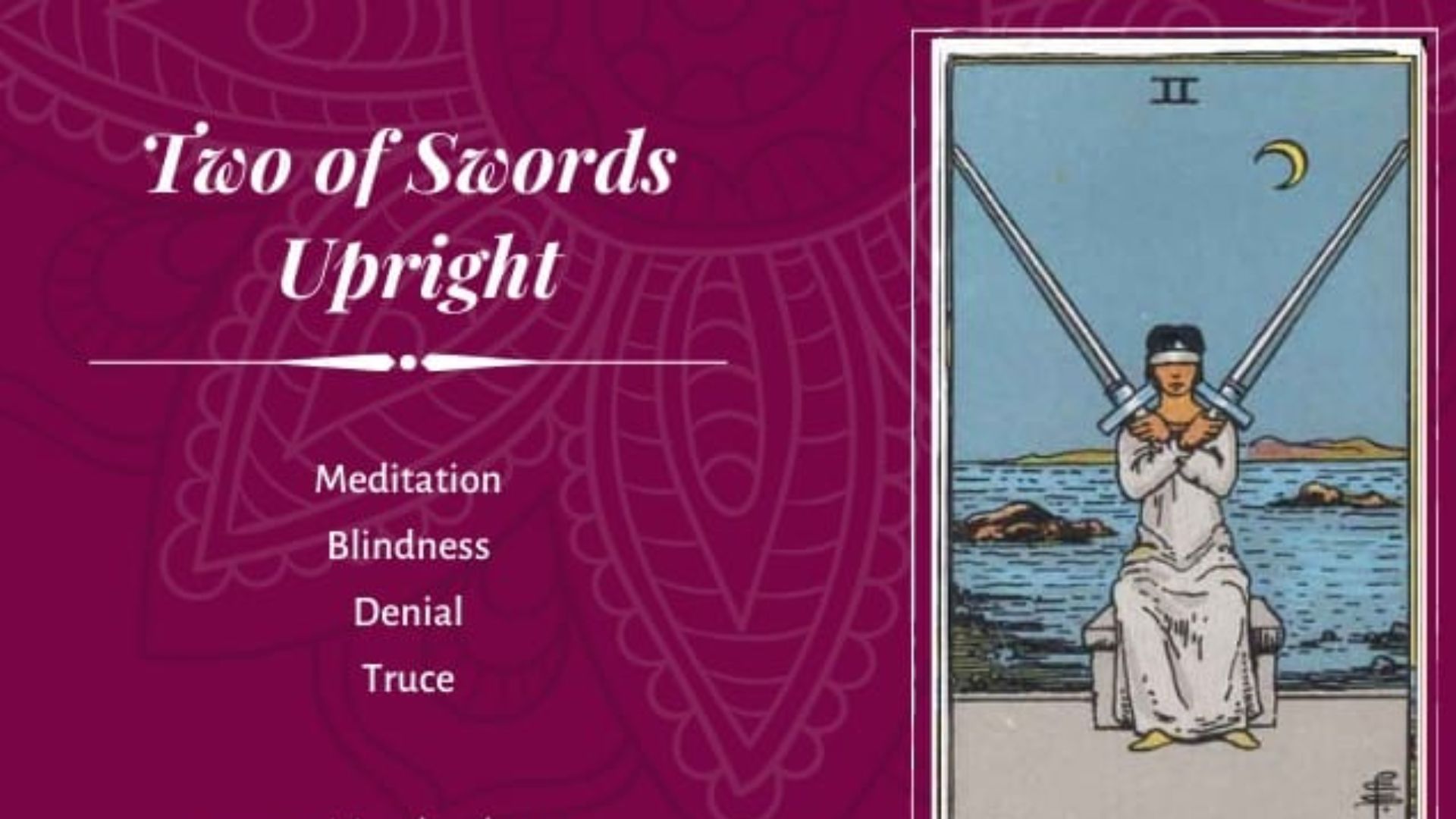
The Two of Swords depicts a blindfolded figure seated before a vast, stormy sea, holding two crossed swords in a stance of apparent balance. The blindfold suggests a deliberate choice to ignore the obvious, while the swords represent the duality of options before you. This card is less about indecision and more about strategic avoidance—a calculated refusal to see what’s right in front of you. The figure’s posture is not one of confusion, but of control; they’ve chosen to sit in stillness rather than face the discomfort of choice.
Metaphorically, the Two of Swords is the moment you pause mid-step, realizing the path ahead is clear but choosing to cover your eyes anyway. It’s the email left unopened, the conversation deferred, the truth tucked away because acknowledging it would disrupt your carefully constructed equilibrium. The card whispers: You know what you must do. Why are you waiting?
Love and Relationships: The Illusion of Neutrality
In matters of the heart, the Two of Swords often signals a relationship stuck in a state of suspended animation. One or both partners may be avoiding a difficult conversation—perhaps about commitment, unmet needs, or past wounds—because the emotional cost feels too high. The card suggests that love is not being nurtured through avoidance; it’s being preserved in a vacuum, where neither growth nor resolution can occur.
If you’re single, this card may reflect your tendency to keep potential partners at arm’s length, not out of malice, but out of fear. You might rationalize your detachment (“I’m not ready,” “It’s complicated”), but the Two of Swords asks: What are you protecting yourself from? The blindfold isn’t just a shield—it’s a cage. To move forward, you must lift it, even if only to peek beneath.

Decision-Making: The Trap of False Balance
The Two of Swords thrives in the gray areas of decision-making, where you convince yourself that not choosing is a form of wisdom. You weigh pros and cons meticulously, yet the act of deliberation becomes a substitute for action. This card warns against the illusion of neutrality: staying in limbo isn’t balance—it’s stagnation. The crossed swords aren’t tools for cutting through confusion; they’re barriers holding you in place.
Ask yourself: Are you truly undecided, or are you using indecision as a way to avoid responsibility? The Two of Swords reveals that some choices aren’t about logic but about fear—fear of failure, of regret, or of losing control. The solution? Acknowledge the fear, then act anyway. The blindfold wasn’t meant to be permanent.
Reversed Two of Swords: Breaking the Silence
When the Two of Swords appears reversed, the blindfold slips, and the truth can no longer be ignored. This is the moment of reckoning—the email you finally open, the conversation you’ve been dreading but must have, the realization that avoidance has only deepened the problem. The reversed card is a call to action, but it’s also a warning: the longer you delay, the harder the truth becomes to face.
In relationships, reversal may signal a breaking point—an ultimatum, a confession, or a decision that can no longer be postponed. In career or personal goals, it could mean acknowledging that your “waiting for the right time” has become a self-sabotaging habit. The reversed Two of Swords doesn’t just lift the blindfold; it forces you to see what’s been hidden in plain sight.
The Psychological Appeal: Why We Cling to Avoidance
The Two of Swords resonates deeply because it reflects a universal human tendency: the comfort of the known over the uncertainty of the unknown. Psychologically, avoidance is a coping mechanism, a way to maintain a fragile sense of control. Yet, as the card shows, this control is an illusion. The stormy sea in the background isn’t just a backdrop—it’s the chaos that avoidance inevitably invites.
This card also highlights the seduction of duality—the belief that two opposing paths can coexist indefinitely. But life doesn’t work that way. The Two of Swords teaches that balance isn’t about sitting still; it’s about choosing a direction, even if it’s imperfect. The swords must eventually be uncrossed, and the blindfold removed.
Practical Steps: Moving Beyond the Two of Swords
So how do you break free from the paralysis of the Two of Swords? Start by naming the avoidance: What am I refusing to see? Write it down, say it aloud, or share it with someone you trust. The act of verbalizing the unspoken is often the first step toward clarity.
Next, challenge the idea that inaction is safe. Ask: What’s the worst that could happen if I act? What’s the worst that could happen if I don’t? Often, the fear of regret outweighs the fear of failure. Finally, take one small step—send the message, have the conversation, make the call. The Two of Swords thrives in the space between thought and action; your goal is to shrink that space until it disappears.
Conclusion
The Two of Swords is more than a tarot card—it’s a psychological snapshot of the moments we choose ignorance over insight, stillness over movement, and control over vulnerability. Its power lies in its honesty: it doesn’t judge your avoidance; it simply holds up a mirror, asking you to see what you’ve been too afraid to acknowledge. Whether in love, decisions, or personal growth, the card’s message is clear: the obvious can’t be avoided forever. The swords will uncross. The blindfold will fall. The question is—will you be ready?
FAQ
What does the Two of Swords tarot card mean?
The Two of Swords signifies avoidance, indecision, and the need to confront the truths we ignore.
How does the reversed Two of Swords differ from the upright position?
When reversed, the Two of Swords indicates that avoidance is no longer possible and action must be taken.
Leave a Reply