Short Answer
The Judgment card in tarot, regardless of its orientation, holds significant weight in both spiritual and psychological realms. When flipped upside down, this card takes on a distinct interpretation that has not only captivated tarot enthusiasts but can also be perceived through the lens of Christian theology. Here, we will explore the multifaceted implications of the upside-down Judgment card and its resonance within a Christian context.
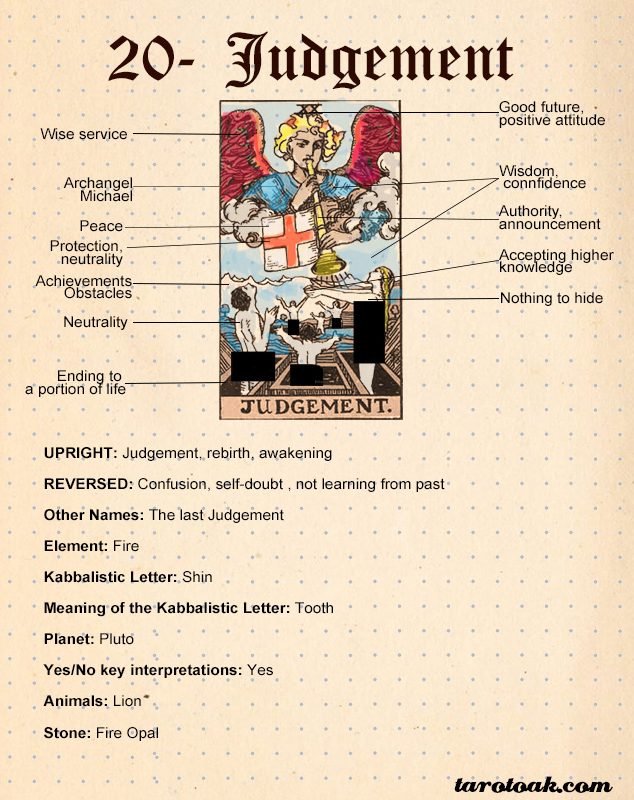
To fully appreciate the depth of the upside-down Judgment card, one must first understand its upright counterpart. The Judgment card generally symbolizes renewal, resurrection, and the revelation of truth. It is often associated with the Last Judgment, a pivotal event in Christian eschatology where individuals are called to account for their lives. The upright card heralds a period of rebirth, where souls are awakened to their true purpose and divine calling.
However, when this card appears reversed, its meaning shifts like shadows at dusk. In the Christian perspective, the upside-down Judgment card can be seen as a reflection of disarray and spiritual stagnation. Rather than embracing renewal, individuals may find themselves ensnared by self-doubt, moral disarray, or a sense of apathy. This card, then, serves as a poignant metaphor for the existential crises many face, akin to wandering in the wilderness without a clear direction.

In Christian theology, the concept of free will plays a pivotal role in one’s spiritual journey. The reversed Judgment card may symbolize the conflicts arising from the misuse of free will. When one refuses to heed the call for introspection and repentance, they can become lost in their own desires and moral ambiguity. This mirrors the stories in the Bible where individuals, engulfed by sin, strayed from the path of righteousness—lost until they finally encountered divine grace.
Moreover, the upside-down Judgment card often acts as a catalyst for self-examination. It signifies a critical period where one is pushed to confront their choices and the consequences stemming from those decisions. In a Christian context, this could echo the call to repentance, urging believers to reflect on their spiritual state and recognize the areas requiring divine intervention. It poses an intriguing question: Are we dismissing our responsibility to align ourselves with God’s plan?
The imagery presented in the Judgment card, both upright and reversed, invokes a powerful metaphor for the dichotomy of hope and despair. In its upside-down state, the card may suggest a forsaking of hope. The figure depicted in the image, often seen rising from graves, represents not just physical resurrection but also spiritual awakening. When inverted, that hope may become obscured, causing the individual to resist transformation—an act that can lead to further alienation from God and community.
Additionally, the reversed Judgment card may allude to the burdens one carries. In Christian faith, the act of confession offers a pathway to unburdening the soul. Yet, the inverted card may indicate an inclination to avoid this cathartic process. It signifies that by not yielding to the divine call for renewal—whether through prayer, service, or fellowship—one risks isolation and spiritual paralysis. The journey toward enlightenment is hampered, akin to a seed buried too deep to sprout, yearning for the nourishing light of grace.
Another essential aspect of the upside-down Judgment card is its emphasis on the concept of accountability. In Christianity, believers are often reminded of their duty to not only themselves but to their community and God. Reversed, this card serves as a reminder of the critical importance of acknowledging one’s shortcomings and the ripple effect they may have on others. Failure to confront one’s moral failures may lead to destructive relationships and a fractured community, thus reinforcing the isolation initiated by the inverted card.
As one contemplates the implications of the upside-down Judgment card, it is pertinent to remember the complexity of the human experience. The struggle to reconcile one’s actions with one’s beliefs can lead to profound insights. Just as the parables in the Bible convey moral lessons through the experiences of flawed individuals, so too can the reversed card serve as a narrative of transformation. Through pain and reckoning, there lies the potential for redemption—an important tenet of Christian faith.
In conclusion, the upside-down Judgment tarot card, when viewed through a Christian perspective, unveils a potent narrative of introspection, accountability, and the pressing need for spiritual awakening. It compels believers to confront the darker corners of their existence and to recognize that the path to renewal often requires facing uncomfortable truths. The journey toward enlightenment is rarely linear; rather, it is filled with peaks of revelation and valleys of doubt. Ultimately, even when the card appears reversed, the possibility of resurrection remains—provided the will to embrace it is summoned. The call for transformation persists, echoing through the corridors of faith, urging one to rise anew from the shadows of their past.
FAQ
What does the upside-down Judgment tarot card mean?
It signifies disarray, spiritual stagnation, and the need for introspection and accountability.
How does the Judgment card relate to Christian theology?
The reversed Judgment card reflects conflicts arising from free will and the importance of repentance.
What is the significance of accountability in the reversed Judgment card?
It highlights the need to confront moral failures and their impact on oneself and the community.
Leave a Reply