Short Answer
In this comprehensive guide, you’ll explore the profound symbolism of the Death card in tarot, uncovering its true meanings beyond common misconceptions. Whether you’re a beginner or an experienced reader, you’ll gain insights into how this card represents transformation, endings, and new beginnings. You’ll learn about the Death card’s upright and reversed interpretations, its role in different tarot spreads, and practical advice for interpreting it in readings. By the end, you’ll understand why endings are not just necessary but essential for growth and renewal.
The Death Card: A Symbol of Transformation
The Death card in tarot is often misunderstood as a harbinger of physical death, but its true meaning is far more nuanced. At its core, the Death card symbolizes transformation, change, and the end of one phase to make way for another. This card represents the natural cycle of life, where endings are necessary for new beginnings. It’s a reminder that growth often requires shedding old habits, relationships, or beliefs that no longer serve us.
Visually, the Death card typically depicts a skeletal figure on horseback, often holding a black flag adorned with a white rose. The skeletal figure symbolizes the inevitability of change, while the horse represents the unstoppable force of transformation. The white rose signifies purity and the promise of new beginnings. Together, these elements convey a message of renewal and the cyclical nature of existence.
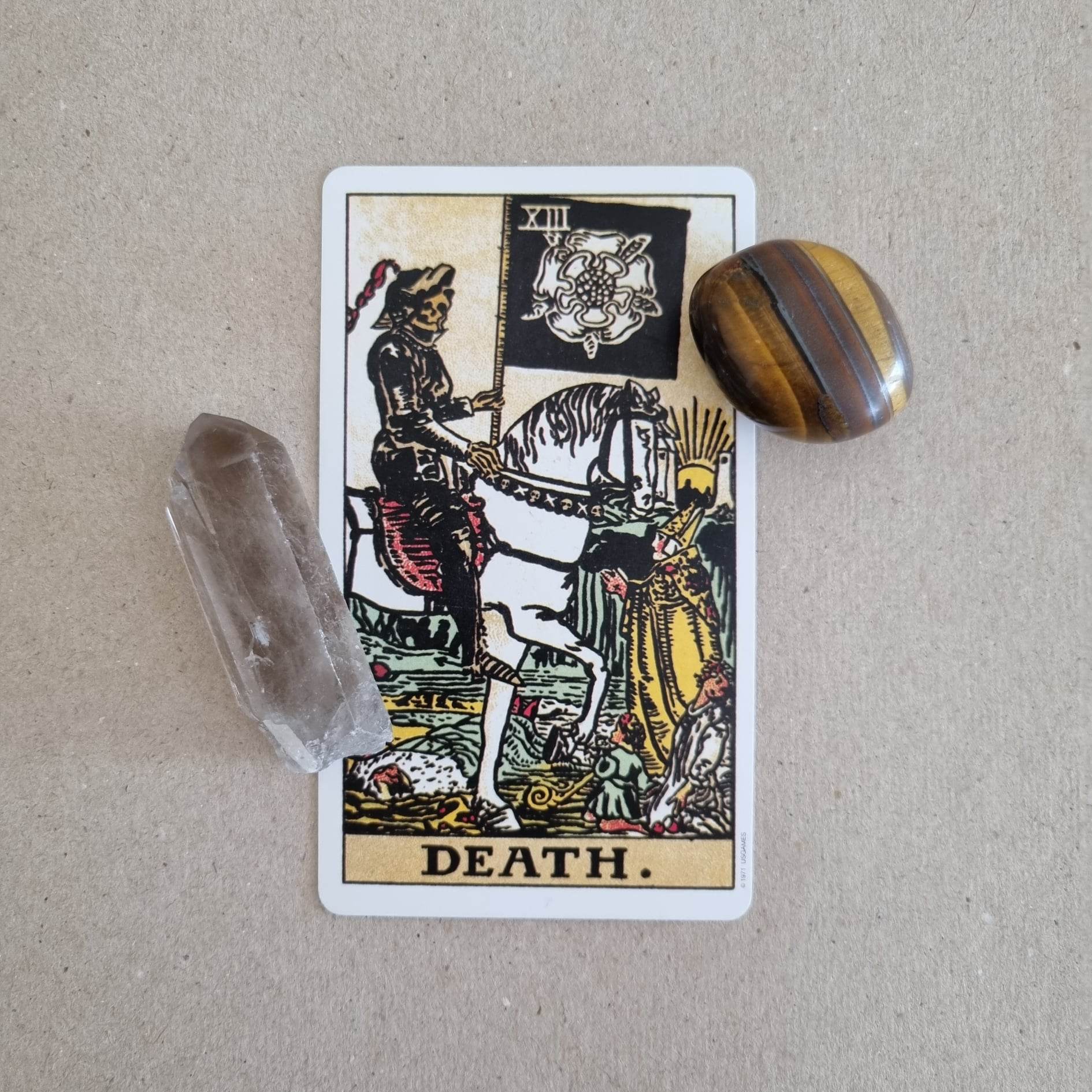
In readings, the Death card encourages you to embrace change rather than fear it. It may appear when you’re facing a significant transition, such as a career shift, the end of a relationship, or a major life decision. Instead of resisting these changes, the card urges you to see them as opportunities for growth and self-discovery.
Upright Death: Embracing Necessary Endings
When the Death card appears upright in a tarot spread, it signals that a major transformation is underway or needed. This could manifest as the end of a job, the dissolution of a relationship, or a shift in personal beliefs. While these endings may feel painful or uncertain, the upright Death card reassures you that they are essential for your evolution.
In love readings, the Death card upright may indicate the end of a relationship that no longer aligns with your growth. It’s not necessarily a negative sign but rather a call to release what no longer serves you. In career readings, it could suggest leaving a job that stifles your potential or embracing a new path that aligns with your passions.
This card also highlights the importance of letting go of the past. Holding onto grudges, outdated habits, or toxic relationships can hinder your progress. The Death card encourages you to release these burdens and make space for new experiences and opportunities. It’s a reminder that every ending is a chance to start anew with clarity and purpose.
Reversed Death: Resistance to Change
When the Death card appears reversed, it suggests that you may be resisting necessary change or clinging to the past. This could manifest as fear of the unknown, denial about a situation, or an unwillingness to let go of what no longer serves you. The reversed Death card is a warning that avoiding transformation can lead to stagnation and missed opportunities.
In personal readings, the reversed Death card may indicate that you’re holding onto a relationship, job, or belief that is no longer healthy or fulfilling. It could also signal that you’re avoiding difficult conversations or decisions that require closure. This card urges you to confront these challenges head-on and embrace the changes you’ve been avoiding.
In some cases, the reversed Death card may also point to unresolved grief or trauma. If you’ve experienced a significant loss, this card could be asking you to process your emotions and allow yourself to heal. It’s a reminder that healing is a necessary part of growth, and avoiding it only prolongs the pain.

To work with the reversed Death card, practice self-reflection and ask yourself where you might be resisting change. Journaling, meditation, or seeking support from a therapist or trusted friend can help you navigate this period with greater awareness and compassion.
The Death Card in Different Tarot Spreads
The Death card’s meaning can vary depending on its position in a tarot spread. In a past-present-future spread, it may indicate that a significant ending occurred in the past and has shaped your current circumstances. In the present position, it suggests that you’re in the midst of a transformative phase. In the future position, it could signal an upcoming change that will bring growth and renewal.
In a relationship spread, the Death card may highlight the need to end a toxic dynamic or release old patterns that no longer serve the relationship. In a career spread, it could point to leaving a job that no longer aligns with your values or pursuing a new opportunity that aligns with your passions. In a self-reflection spread, it may encourage you to let go of limiting beliefs or habits that are holding you back.
When the Death card appears alongside other Major Arcana cards, its meaning can deepen. For example, pairing it with The Tower may indicate a sudden, unexpected change, while pairing it with The Star could suggest that the transformation will lead to hope and renewal. Understanding these combinations can provide greater clarity in your readings.
Practical Advice for Interpreting the Death Card
Interpreting the Death card in a reading requires sensitivity and an open mind. Start by considering the context of the question or situation. Is the querent facing a major life transition? Are they resisting change or seeking guidance on how to move forward? The Death card’s message will differ based on these factors.
Pay attention to the emotions and imagery associated with the card. Does the querent feel fear, relief, or uncertainty? Are there specific symbols in the card that resonate with their situation? For example, if the querent is leaving a job, the skeletal figure on horseback might symbolize the end of their old role and the beginning of a new journey.
Use the Death card as an opportunity to encourage the querent to embrace change. Ask open-ended questions like, “What are you being asked to release?” or “How can this ending create space for new opportunities?” This approach helps the querent see the card’s positive potential rather than focusing solely on its challenging aspects.

Finally, remind the querent that the Death card is not a prediction of doom but a call to action. It’s an invitation to trust the process of change and believe that every ending is a step toward a brighter future.
Conclusion
The Death card in tarot is a powerful reminder that endings are not just necessary—they are essential for growth and renewal. Whether it appears upright or reversed, this card challenges us to embrace change, release what no longer serves us, and trust in the natural cycles of life. By understanding its symbolism and applying its lessons to your readings, you can help others navigate transitions with courage and clarity.
Remember, the Death card is not a warning of physical death but a celebration of transformation. It’s a call to let go of the old to make way for the new, to release fear and embrace the unknown. As you continue your tarot journey, let the Death card guide you toward deeper self-awareness and the courage to evolve.
Leave a Reply