Short Answer
Ever wondered how those simple number cards can transform learning into an adventure? Whether you’re a parent, teacher, or just someone fascinated by the magic of numbers, this guide will unlock the secrets behind number cards and their playful potential. You’ll discover what these cards represent, how they can be used to teach counting, and even how to turn learning into a fun challenge for kids. By the end, you’ll see numbers not just as symbols, but as gateways to creativity and problem-solving!
What Are Number Cards and Why Do They Matter?
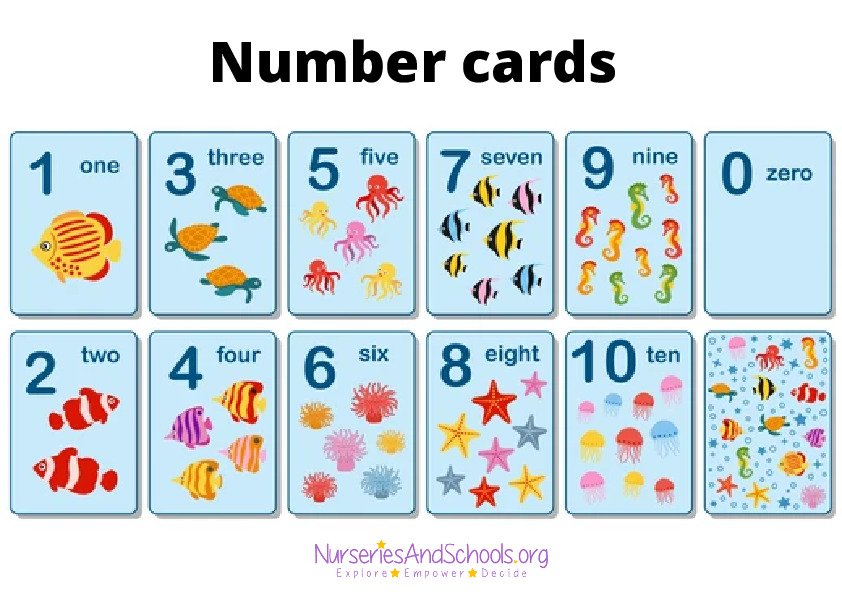
Number cards are visual tools designed to help learners recognize, understand, and interact with numbers in a tangible way. Unlike abstract symbols on a page, these cards often feature bright colors, familiar objects, or even playful designs that make numbers feel accessible and engaging. For young children, they serve as a bridge between concrete counting (using physical objects) and abstract numerical concepts.
These cards can take many forms—some show digits with corresponding quantities of dots, animals, or fruits, while others might feature simple equations or number sequences. The key idea is to make numbers visible, relatable, and fun. For example, a card displaying the number “5” alongside five apples helps a child connect the numeral to a real-world quantity, reinforcing comprehension through visual association.
Beyond early childhood education, number cards are also used in games, flashcard drills, and even therapeutic settings to improve cognitive skills. Their versatility makes them a staple in classrooms and homes alike, proving that learning doesn’t have to be dull to be effective!
The Hidden Language of Numbers on Cards
At first glance, number cards might seem straightforward, but they’re packed with meaning. Each element—whether it’s the font, color, or accompanying imagery—is carefully chosen to enhance understanding. For instance:
- Digits vs. Quantities: Some cards pair the numeral (e.g., “7”) with a matching set of objects (e.g., seven stars). This dual representation helps learners grasp that numbers aren’t just symbols but represent specific amounts.
- Color Coding: Bright colors can draw attention to certain numbers or group them by value (e.g., red for 1–5, blue for 6–10). This visual hierarchy makes it easier to spot patterns or differences.
- Sequencing: Cards arranged in order (1, 2, 3…) teach progression, while shuffled sets encourage recognition and memory. Some cards even include arrows or guides to show the direction of counting.
For older learners, number cards might introduce more complex ideas like place value (e.g., separating tens and ones) or even basic arithmetic (e.g., cards showing “+” or “=” symbols). The beauty of these tools lies in their adaptability—they grow with the learner!

How to Use Number Cards for Maximum Learning
Ready to turn number cards into a dynamic learning experience? Here are some tried-and-true methods to make the most of them:
1. Flashcard Drills
Use the cards for quick, repetitive exposure. Hold up a card and ask the learner to name the number or count the objects aloud. Time them for an added challenge, or turn it into a game where correct answers earn points. For older kids, mix in cards with simple addition or subtraction problems.
2. Number Hunts
Scatter number cards around a room or outdoor space and have the learner find and arrange them in order. Add a twist by calling out a number (e.g., “Find the card with 8!”) to encourage speed and accuracy. This activity combines movement with learning, making it ideal for kinesthetic learners.
3. Storytelling with Numbers
Create a narrative around the numbers. For example, “The number 3 is a magic number because it’s the number of apples the bunny needs to share with his friends!” This contextualizes numbers in a story, making them memorable and meaningful. Encourage the learner to invent their own stories using the cards.
4. DIY Challenges
Pose playful challenges like:
- “Missing Number”: Lay out cards in order but remove one. Can the learner spot the gap and name the missing number?
- “Greater Than/Less Than”: Flip two cards and ask which number is larger or smaller. Use symbols like “>” or “<" to introduce comparison.
- “Number Detective”: Give clues (e.g., “I’m thinking of a number between 4 and 6”) and have the learner find the matching card.
Beyond the Basics: Advanced Uses for Number Cards
Number cards aren’t just for beginners! Older students or advanced learners can use them to explore deeper mathematical concepts:
1. Place Value Exploration
Use multiple sets of number cards to teach place value. For example, lay out cards for “2” and “3” to represent 23, then swap them to show 32. This visual swap helps learners understand how digit placement changes a number’s value.
2. Fractions and Decimals
Create fraction cards by dividing a whole (e.g., a circle or rectangle) into equal parts and labeling them with fractions (1/2, 1/4). Similarly, decimal cards can show tenths or hundredths to introduce decimal notation. Pair these with whole number cards to compare values.
3. Algebraic Thinking
Introduce variables by replacing numbers with symbols or letters. For example, use a card with “x” and another with “5” to represent the equation “x = 5.” This sets the stage for solving for unknowns in later grades.
4. Probability Games
Use number cards to teach probability by predicting outcomes. For instance, flip a card and ask, “What’s the chance it’s an even number?” This introduces concepts like likelihood and randomness in a hands-on way.
Common Pitfalls and How to Avoid Them
While number cards are incredibly useful, they can sometimes lead to misconceptions if not used thoughtfully. Here’s what to watch out for:
- Over-Reliance on Memorization: Simply drilling numbers without context can turn learning into a rote exercise. Always pair cards with real-world examples or stories to reinforce meaning.
- Ignoring the Learner’s Pace: Some kids may rush through cards without fully processing the numbers. Encourage slow, deliberate counting and praise accuracy over speed.
- Limited Creativity: If cards are always used in the same way (e.g., only for flashcards), they can become monotonous. Mix it up with games, art projects, or outdoor activities to keep engagement high.
- Skipping the “Why”: Always explain the purpose behind an activity. For example, “We’re using these cards to learn that 7 is one more than 6!” This builds a deeper understanding rather than surface-level recognition.
Conclusion
Number cards are far more than just pieces of paper with digits—they’re tools for discovery, creativity, and connection. Whether you’re helping a child take their first steps into the world of numbers or exploring advanced mathematical concepts, these cards offer a flexible and engaging way to learn. By incorporating games, storytelling, and hands-on challenges, you can transform a simple activity into a lifelong love of numbers.
So why not start today? Grab a set of number cards, gather a learner, and dive into the adventure. Who knows? You might just find that numbers become your favorite playground!
FAQ
What are number cards?
Number cards are visual tools that represent numbers and quantities, aiding in learning and recognition.
How can number cards be used effectively?
They can be used in flashcard drills, number hunts, storytelling, and various DIY challenges to enhance learning.
Leave a Reply