Short Answer
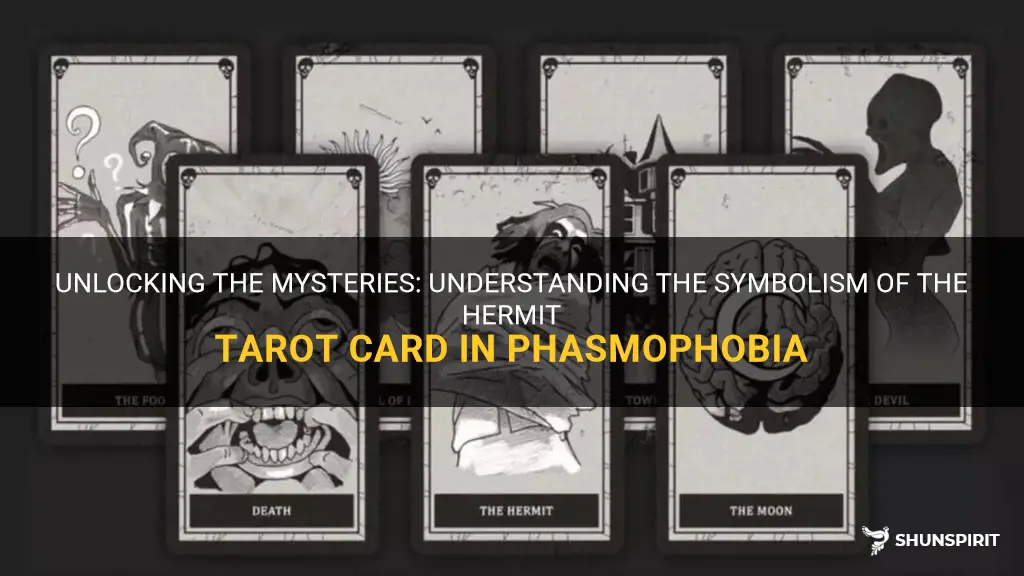
The Hermit tarot card, integral to various interpretations within the tarot tradition, demands attention, particularly with its embodiment of introspection and spiritual guidance. This evocative card finds its niche within the context of Phasmophobia, a cooperative horror game that immerses players in the exploration of haunted locales. Now, imagine, what does the Hermit reveal to us when viewed through a Christian lens? This contemplation presents a captivating challenge: can we reconcile the notions of solitude and exploration of the unknown with the Christian faith? Let us delve into the depths of this inquiry.
At first glance, the Hermit is depicted as a solitary figure, a symbol of wisdom and insight. In traditional tarot interpretations, the Hermit wields a lantern, guiding oneself and others through the perplexities of life. Within the context of Phasmophobia, however, this symbolism adapts uniquely. In the game, players are faced with the supernatural, each ghostly encounter echoing the uncertainties of life after death—an inevitable theme within Christianity. The Hermit, therefore, serves as a metaphorical guide for those venturing into the unknown horrors that lie in the dark.
From the Christian perspective, the act of ‘searching for truth’ resonates deeply. The Hermit urges believers to seek wisdom through contemplation and prayer. This aligns closely with a Christian engagement in Phasmophobia, where players not only navigate dark corridors but also seek to understand the spiritual significance of their encounters. Can we think of the Hermit as a representation of Christ-like qualities? The notion of guiding lost souls could parallel how Christians are called to lead others toward the light of faith, shedding illumination on their paths.
Furthermore, solitude is a recurring theme in both the Hermit card and the Christian narrative. Scripture frequently underscores the importance of retreating into oneself for prayer and reflection. Just as the Hermit steps away from the cacophony of society, individuals in the Christian faith often find strength through solitude—seeking communion with God. In Phasmophobia, the quiet tension of isolation amplifies this connection to a celestial insight, pushing players to confront their fears while contemplating their beliefs on the afterlife.
As players embody the Hermit, they may ponder deeper existential questions: what does death signify? How does faith interact with the fear of the unknown? By immersing themselves in haunted houses, Christians may explore traditional narratives about souls in purgatory, the presence of faithful spirits, or even the redemptive qualities of some supernatural experiences, thus stimulating a dialogue between their virtual adventures and real-world beliefs.
The Hermit also embodies wisdom acquired through trials and tribulations. In Christian theology, suffering is often positioned as a purifying force, enhancing one’s spiritual growth and understanding. Players in Phasmophobia, facing daunting apparitions, may juxtapose their in-game experiences with the struggles of life, reflecting on their own journeys and the growth forged through adversity. This opens avenues for examining how one’s faith sustains them in frightening circumstances, thus bridging gaming experiences with personal faith journeys.
In considering the challenge presented by the game, players might reflect on their own timing and readiness to face fears, mirroring the cardinal virtues of patience and fortitude celebrated in Christian teachings. Does the Hermit encourage believers to confront not just the fears of in-game ghosts but to grapple with their own spiritual fears? The juxtaposition of horror and wisdom invites a deeper exploration into how courage and faith manifest in both gaming and life.
Interestingly, the Hermit is also associated with the act of seeking. This aligns with the Christian call to be diligent in their faith search—a reminder that the journey towards truth is often filled with uncertainties. Players may find themselves searching not just for the ghost’s evidence but for affirmation of their spiritual beliefs, weaving a narrative of discovery that aligns with Christ’s teachings. What greater metaphor could there be for the eternal search for understanding, peace, and connection with God?
Exploration in Phasmophobia, with its eerie ambience, offers a unique bilateral relationship between fear and faith. Each ghostly encounter may evoke questions regarding spiritual existence, existence beyond death, and even the ultimate plans of God for humanity. The Hermit, as a card of solitary reflection, encourages one to use these moments to delve deeper into their faith, fostering contemplation that could lead to revelations about their relationship with God.
Finally, the Hermit’s lesson on the importance of guidance fosters a sense of community—a fundamental aspect of Christianity. Observing one’s peers in Phasmophobia can evoke collaboration, teamwork, and, quite significantly, the need for support in the face of adversity. Just as believers come together to build one another up in faith, players must rely on each other, confronting challenges as a united front. The virtual manifestation, then, takes on a holy resonance, reflecting how spiritual journeys are seldom traversed in solitude.
In conclusion, witnessing the Hermit tarot card through the lens of Phasmophobia infuses both a playful inquiry and a profound challenge into the fabric of faith and fear. What becomes glaringly clear is that within the shadows of uncertainty lie possibilities for exploration—both in the game and in spiritual contemplation. How resolutely does your faith guide you through the unknown terrains of life, and how can the lessons drawn from both the Hermit and haunting experiences evolve your understanding of existence? The journey is yours to embark upon with each step into the abyss.
FAQ
What does the Hermit tarot card symbolize?
The Hermit tarot card symbolizes introspection, wisdom, and spiritual guidance, often representing the search for truth.
How is the Hermit card interpreted in the context of Phasmophobia?
In Phasmophobia, the Hermit card serves as a metaphorical guide for players navigating fears and spiritual questions about the unknown.
What Christian themes can be linked to the Hermit card?
The Hermit card relates to Christian themes of solitude, reflection, and seeking wisdom through prayer and contemplation.
FAQ
What does the Hermit tarot card symbolize?
The Hermit tarot card symbolizes introspection, wisdom, and spiritual guidance, often representing the search for truth.
How is the Hermit card interpreted in the context of Phasmophobia?
In Phasmophobia, the Hermit card serves as a metaphorical guide for players navigating fears and spiritual questions about the unknown.
What Christian themes can be linked to the Hermit card?
The Hermit card relates to Christian themes of solitude, reflection, and seeking wisdom through prayer and contemplation.
Leave a Reply