Short Answer
Card Overview
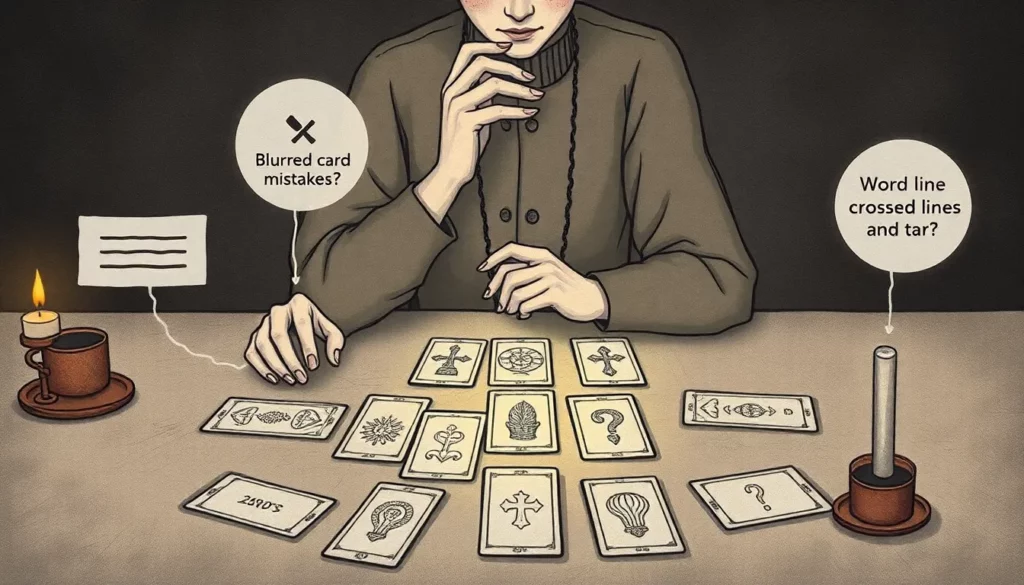
Common tarot reading mistakes refer to frequent errors or misunderstandings that occur during the process of interpreting tarot cards. These mistakes can arise from a lack of knowledge, over-reliance on intuition without structure, or emotional bias. They influence the outcome and usefulness of a tarot reading, potentially leading to confusion or misleading guidance. Recognizing and addressing these errors is important for readers seeking to provide meaningful and balanced insights.
Upright Meaning
When tarot readers avoid common mistakes, the reading tends to be clearer, more focused, and constructive. Upright, this means approaching the cards with an open mind, using established meanings as a foundation, and maintaining objectivity. It encourages readers to communicate messages with accuracy and empathy, allowing querents to gain useful information about opportunities, challenges, or personal growth. Practicing patience and preparation are key components of a successful upright reading.
Reversed Meaning
Reversed tarot reading mistakes often stem from confusion or misapplication of reversed card meanings, such as interpreting every reversed card as negative or ignoring reversals altogether. Such errors can obscure the nuanced messages of the cards, resulting in incomplete or skewed insights. Reversed mistakes also include resistance to acknowledging internal biases or emotional influences that block clear interpretation. Being aware of these pitfalls helps readers approach reversals with balanced consideration and avoid misinterpretation.
Love Meaning
In love readings, common mistakes include projecting personal desires onto the cards, rushing to definitive answers about relationships, or overlooking the complexity of emotional dynamics. Misreading the cards can lead to unrealistic expectations or ignoring important relational nuances. For singles and partners alike, avoiding these errors allows for a more honest and constructive exploration of attraction, communication, and compatibility without forcing predetermined outcomes.
Career Meaning
Career-related tarot mistakes often involve overgeneralizing or expecting the cards to predict exact job outcomes. Readers may misinterpret cards by ignoring situational context or failing to consider the querent’s active role in their career path. Avoiding these mistakes means using the cards as guidance tools for decision-making, workplace challenges, and professional growth instead of deterministic forecasts. Careful interpretation supports clearer insights into ambition, leadership, and opportunities.
Money Meaning
Financial tarot mistakes include misreading cards as fixed financial predictions or ignoring the broader context of the querent’s financial habits and mindset. Mistakes such as assuming immediate financial gain or loss without nuance can mislead querents. A thoughtful approach treats money-related cards as reflections of attitudes toward spending, saving, abundance, and caution, encouraging responsible financial decision-making rather than fear or impulsiveness.
Spiritual Meaning
In spiritual tarot readings, common mistakes involve skipping deeper introspection or relying too heavily on external validation. Ignoring the symbolic and intuitive aspects of the cards can limit spiritual growth and self-awareness. Recognizing these pitfalls encourages readers to use tarot as a tool for inner reflection, karmic understanding, and connection with higher wisdom, promoting personal transformation and healing.
Yes or No Meaning
Common mistakes in yes-or-no tarot readings include expecting absolute answers from complex cards or ignoring the importance of context and question phrasing. Some cards carry conditional or ambiguous energies that require careful judgment rather than a simple yes or no. Avoiding these errors involves understanding that tarot often provides guidance that is nuanced, situational, and requires interpretation based on the entire spread and querent’s circumstances.
Symbolism
Common tarot reading mistakes often arise from misinterpreting or overlooking the symbolism within the cards. Key symbols such as colors, numbers, figures, and objects provide rich layers of meaning that require study and reflection. Ignoring these elements can result in superficial or inaccurate readings. Understanding the symbolic language enhances intuitive insight and helps readers connect the cards’ imagery to their deeper themes and messages.
Card Combinations
Errors frequently occur when readers interpret cards in isolation without considering their combinations. The meaning of a card can shift significantly when paired with others, especially with Major Arcana or court cards. For example, a card suggesting change may be softened or intensified by neighboring cards indicating stability or conflict. Failing to recognize these interactions can oversimplify or distort the reading. Awareness of card combinations improves the accuracy and depth of interpretation.
FAQ
What are the most common errors beginners make in tarot readings?
Beginners often rely too heavily on memorized meanings, ignore card reversals, project personal bias, or fail to consider the context of the question and surrounding cards.
Can tarot mistakes be avoided entirely?
While mistakes are a natural part of learning, they can be minimized through study, practice, self-awareness, and seeking feedback from experienced readers.
How does emotional bias affect tarot readings?
Emotional bias can cause readers to interpret cards based on their own desires or fears rather than the querent’s situation, leading to inaccurate or skewed readings.
Leave a Reply