Short Answer
Welcome to your guide on the Two of Swords Tarot card, a card that often signals avoidance, indecision, or a refusal to confront an obvious truth. In this guide, you’ll explore the deeper meanings behind this card, uncover the challenges it presents, and learn how to navigate the mental blockages it represents. By the end, you’ll have a clearer understanding of how this card challenges you to face reality—even when it’s uncomfortable.
The Two of Swords: A Card of Avoidance and Illusion
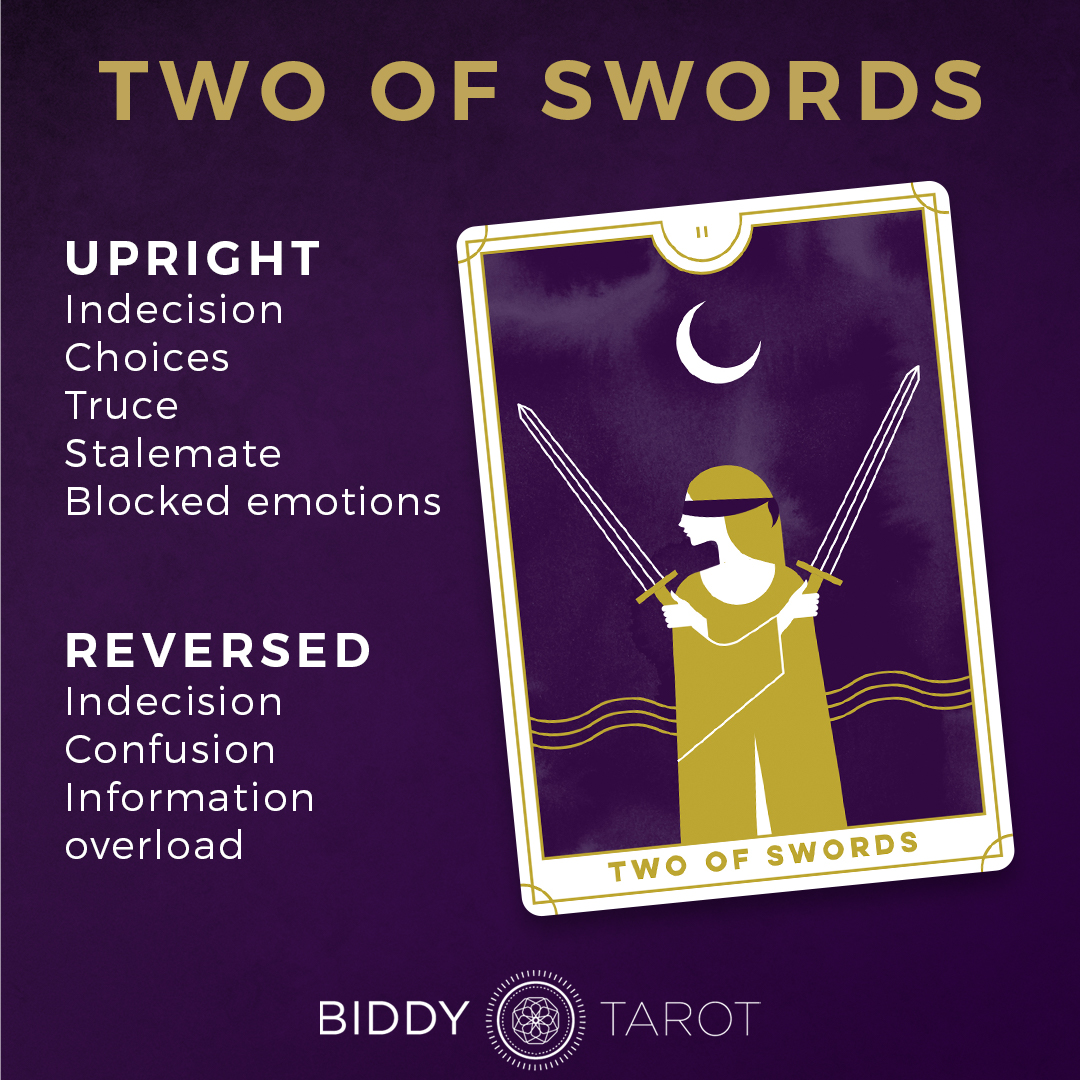
The Two of Swords is a card of deliberate avoidance. The figure in the card sits with a sword in each hand, blindfolded, as if refusing to see the truth right in front of them. This imagery speaks to a moment of mental paralysis, where you’re aware of a problem but choose to ignore it, hoping it will resolve itself. The blindfold symbolizes self-deception—you’re not just avoiding the truth; you’re actively preventing yourself from seeing it.
This card often appears when you’re stuck in overthinking, weighing pros and cons endlessly without making a decision. The problem isn’t that you lack information; it’s that you’re afraid of the consequences of choosing one path over another. The Two of Swords reminds you that avoidance doesn’t make the issue disappear—it only delays the inevitable.
Why Are You Avoiding the Obvious? Unpacking the Challenge
The Two of Swords poses a playful yet pointed question: “What are you pretending not to see?” This card challenges you to recognize the mental barriers you’ve put up, whether out of fear, comfort, or sheer stubbornness. The obvious truth is staring you in the face, but you’ve chosen to look away.
Common scenarios where this card appears include:
- Relationships: Ignoring red flags or unresolved conflicts because confrontation feels too daunting.
- Career: Staying in a job or project that no longer fulfills you, hoping things will improve on their own.
- Personal Growth: Avoiding self-reflection or difficult emotions because acknowledging them would require change.
The Two of Swords doesn’t just highlight avoidance—it demands action. The longer you sit in indecision, the more energy you waste on mental gymnastics instead of addressing the root issue.
The Blindfold of Comfort: Why Avoidance Feels Safe (But Isn’t)
One of the most insidious aspects of the Two of Swords is the illusion of safety it creates. The blindfold isn’t just a physical barrier; it’s a psychological crutch. By refusing to see the truth, you protect yourself from short-term discomfort—but at what cost? Avoidance might feel safe in the moment, but it erodes trust in yourself and others. It keeps you in a state of limbo, where progress is impossible, and clarity remains out of reach.
Ask yourself: “What am I gaining by not seeing this clearly?” Often, the answer is nothing. The Two of Swords exposes the futility of hiding from reality. The longer you delay, the more the unresolved issue grows in power, making it harder to address later.
Breaking Free: How to Remove the Blindfold
So, how do you move past the Two of Swords? The first step is acknowledging the avoidance. Admit to yourself that you’ve been ignoring the obvious. This isn’t about self-criticism—it’s about honesty. Once you recognize the pattern, you can start dismantling it.
Here are practical ways to break free from the Two of Swords’ grip:
- Name the Fear: What’s the worst that could happen if you confront the truth? Write it down and examine it rationally.
- Seek Perspective: Talk to someone you trust—a friend, mentor, or therapist—to gain an outside view. Sometimes, an objective opinion helps you see what you’ve been missing.
- Take Small Steps: You don’t have to solve everything at once. Start with one small action that moves you toward clarity, even if it’s just gathering information or setting a boundary.
- Embrace Discomfort: Growth rarely happens in comfort zones. Remind yourself that temporary discomfort is better than long-term stagnation.
The Two of Swords isn’t a punishment—it’s an invitation to grow. By removing the blindfold, you reclaim your power to make decisions and take control of your life.
When the Two of Swords Appears in a Reading: What It’s Really Saying
In a tarot reading, the Two of Swords often signals a crossroads. It might indicate that you’re deliberately ignoring a problem or that you’re overanalyzing a situation to the point of paralysis. The card asks you to stop hiding and start facing reality head-on.
If this card appears alongside others, its meaning can shift slightly:
- With The High Priestess: There’s hidden knowledge you’re avoiding. Trust your intuition.
- With The Tower: Avoidance has led to a breakdown. It’s time to face the consequences.
- With The Star: Hope is on the horizon, but only if you take the first step toward clarity.
The Two of Swords is a call to action. It won’t let you stay in denial forever—so why not address the issue now?
Conclusion: The Power of Facing the Obvious
The Two of Swords is a card that challenges you to stop pretending. It’s easy to sit in the comfort of ignorance, but true growth comes from confronting what you’ve been avoiding. Whether it’s a difficult conversation, a career change, or an emotional truth, the Two of Swords reminds you that clarity is on the other side of courage.
Next time this card appears, ask yourself: “What truth have I been too afraid to see?” Then, take off the blindfold. The path forward starts with honesty—with yourself and with the world around you.
FAQ
What does the Two of Swords Tarot card mean?
It represents avoidance and a refusal to confront the truth, often indicating indecision.
How can I overcome the challenges posed by the Two of Swords?
Acknowledge your avoidance, seek perspective, and take small actionable steps towards clarity.
Leave a Reply