Short Answer
Welcome to your comprehensive guide on interpreting tarot cards like a pro. Whether you’re a beginner or looking to refine your skills, this article will walk you through the essential techniques, card meanings, and practical steps to deepen your understanding of tarot. By the end, you’ll be equipped to perform insightful readings with confidence and clarity.
Understanding the Basics of Tarot
Before diving into interpretations, it’s crucial to grasp the foundational elements of tarot. A standard tarot deck consists of 78 cards divided into two main groups: the Major Arcana and the Minor Arcana. The Major Arcana (22 cards) represents significant life themes and spiritual lessons, such as The Fool, The Lovers, and Death. These cards often signify major turning points or influences in a reading.
The Minor Arcana (56 cards) is further split into four suits—Cups, Pentacles, Swords, and Wands—each corresponding to different aspects of life. Cups relate to emotions and relationships, Pentacles to finances and material matters, Swords to intellect and conflict, and Wands to creativity and ambition. Understanding these suits will help you tailor your interpretations to specific areas of a querent’s life.

Choosing the Right Tarot Spread
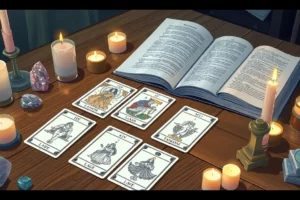
Tarot spreads are layouts that determine how cards are positioned to answer specific questions or provide insights. Beginners should start with simple spreads, such as the Three-Card Spread, which represents past, present, and future. As you advance, you can explore more complex layouts like the Celtic Cross, which offers a deeper dive into a situation by examining influences, challenges, and potential outcomes.
When selecting a spread, consider the question or topic at hand. For general guidance, a single-card draw can suffice. For relationship readings, spreads like the Relationship Spread (focusing on dynamics between two people) or the Love Triangle Spread (exploring three potential paths) are effective. Always ensure the spread aligns with the querent’s needs to provide meaningful insights.
Interpreting Major Arcana Cards
Major Arcana cards carry profound symbolic meanings that transcend everyday situations. For instance, The Magician (Card I) represents manifestation, skill, and resourcefulness, indicating that the querent has the tools to achieve their goals. In contrast, The High Priestess (Card II) embodies intuition, mystery, and subconscious wisdom, suggesting the need to trust inner guidance.
Each Major Arcana card tells a story, and their positions in a spread can alter their meanings. For example, The Tower (Card XVI) often signifies sudden upheaval or revelation. If it appears upright, it may indicate a necessary breakdown leading to growth. Reversed, it could suggest resistance to change or delayed awakenings. Pay attention to the card’s imagery, numerology, and elemental associations to enrich your interpretations.
Decoding Minor Arcana Suits and Cards
The Minor Arcana provides nuanced details about daily life, offering clarity on specific challenges or opportunities. In the Cups suit, the Ace of Cups represents new emotional beginnings or love, while the Ten of Cups signifies harmony and fulfillment in relationships. Pentacles focus on material aspects; the Five of Pentacles may indicate financial struggle, while the King of Pentacles embodies abundance and leadership.
Swords deal with thoughts and conflicts. The Ace of Swords heralds a breakthrough in clarity or communication, while the Three of Swords often reflects heartache or betrayal. Wands symbolize creativity and passion. The Page of Wands suggests a spark of inspiration, while the Ten of Wands indicates burnout or overcommitment. Study the imagery and traditional meanings of each card to recognize patterns and themes in readings.
Reading Reversed Tarot Cards
Reversed tarot cards (cards drawn upside down) can indicate blocked energy, internal struggles, or the opposite of the card’s upright meaning. For example, the upright Six of Cups represents nostalgia and childhood joy, while reversed, it may suggest dwelling on the past or unresolved issues. However, interpretations vary—some readers view reversals as internalized energies rather than negative omens.
Context is key when interpreting reversals. A reversed card in a spread about career may highlight self-doubt or unfulfilled potential, while in a love reading, it could point to communication issues. Always consider the surrounding cards and the querent’s question to refine your understanding of reversals.
Developing Intuition and Personal Connection
While traditional meanings provide a solid foundation, developing your intuition is essential for professional-level readings. Start by meditating with your deck, shuffling while focusing on a question, and noting which cards stand out. Keep a tarot journal to track recurring symbols, emotions, and insights from each reading.
Trust your gut feelings when interpreting cards. If a card’s imagery evokes a strong reaction, explore that connection. Over time, your personal associations with the cards will blend with traditional meanings, creating a unique and authentic reading style. Practice regularly to strengthen this intuitive bond.
Ethical Considerations in Tarot Readings
As a tarot reader, it’s vital to approach readings with ethics and responsibility. Avoid making definitive predictions about the future, as tarot offers guidance, not certainties. Respect the querent’s boundaries and avoid probing into sensitive topics without consent. If a reading reveals distressing information, offer support and encourage the querent to seek professional help if needed.
Confidentiality is paramount. Ensure the querent feels safe sharing their concerns, and never disclose their personal details or reading outcomes without permission. Ethical readings prioritize the querent’s well-being, fostering trust and integrity in your practice.
Conclusion
Mastering tarot interpretation is a journey of continuous learning and self-discovery. By understanding the structure of the deck, selecting appropriate spreads, and honing your intuition, you can deliver insightful and meaningful readings. Remember that tarot is a tool for reflection and guidance, not a definitive answer to life’s complexities. With practice and an open mind, you’ll develop the skills to interpret tarot cards like a pro, offering clarity and empowerment to those seeking your insights.
FAQ
What is the best tarot spread for beginners?
The Three-Card Spread is recommended for beginners as it is simple and provides insights into past, present, and future.
How do reversed tarot cards affect interpretation?
Reversed cards often indicate blocked energy or internal struggles and can alter the upright meaning depending on context.
Can tarot cards predict the future?
Tarot cards offer guidance and insights rather than definitive predictions about the future.
How can I develop intuition for tarot reading?
Meditate with your deck, keep a tarot journal, and practice regularly to build a personal connection and intuitive understanding.
Leave a Reply