Short Answer
This guide explores the deeper meaning behind the Death card in the Tarot, emphasizing its association with transformation rather than literal death. You’ll learn why this card fascinates so many people, how its symbolism reflects personal growth, and how to interpret its messages in readings. By the end, you’ll understand why the Death card is often misunderstood and how to embrace its powerful energy for positive change.
The Death Card: A Misunderstood Symbol
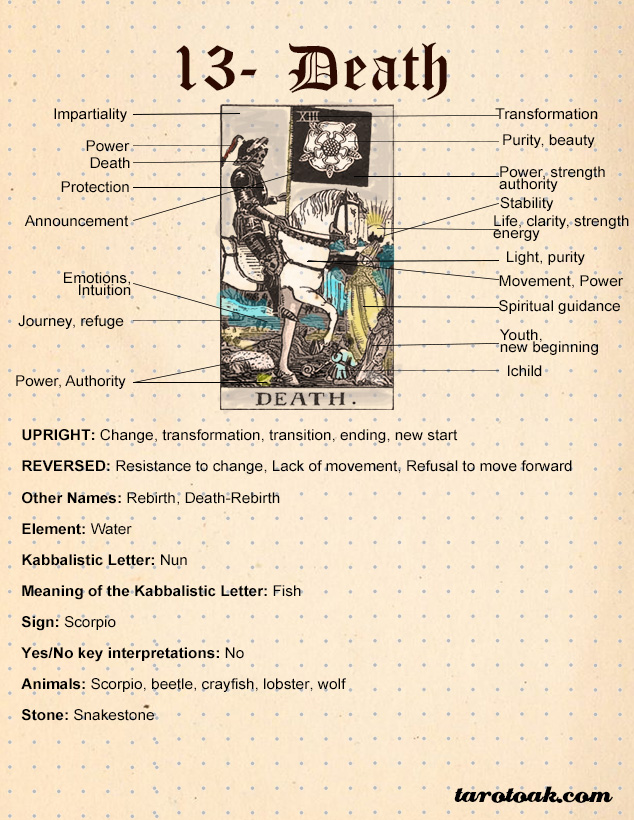
The Death card in the Tarot is one of the most feared and misunderstood cards in the deck. Many people associate it with physical death or loss, but this interpretation only scratches the surface. In reality, the Death card represents transformation, endings, and rebirth. It symbolizes the natural cycle of life, where old patterns, habits, or situations must end to make way for new growth. This card often appears when a major change is on the horizon, signaling that something in your life is coming to a close so that something better can begin.
One of the reasons the Death card fascinates people is its stark imagery. Often depicted as a skeletal figure riding a white horse, wielding a black banner adorned with a white rose, the card’s visual symbolism is both striking and evocative. The skeletal figure represents the inevitability of change, while the white horse symbolizes purity and the transition to a higher state. The white rose on the banner signifies hope and the promise of renewal. These elements work together to convey a message of transformation rather than destruction.
Why the Death Card Fascination Exists
The Death card’s allure lies in its dual nature—it is both feared and revered. On one hand, people are drawn to its dramatic imagery and the idea of profound change. On the other, the fear of the unknown and the end of familiar things makes it a card that people often resist. This fascination is rooted in humanity’s universal fear of change and the unknown. The Death card challenges us to confront these fears and recognize that transformation is a necessary part of growth.
Another reason for the Death card’s fascination is its connection to ancient myths and archetypes. Many cultures have stories of figures who bring about transformation, such as the Greek god Hades or the Hindu goddess Kali. These figures, like the Death card, represent the duality of destruction and creation. The Death card taps into this deep-seated archetype, making it a powerful symbol in the Tarot. Its ability to resonate with these universal themes is what makes it so compelling to so many people.
Key Aspects of the Death Card’s Meaning
The Death card is rich with symbolism, and each element offers insight into its deeper meaning. Here are some of the key aspects to consider when interpreting this card:
Endings and New Beginnings
The most fundamental aspect of the Death card is its representation of endings and new beginnings. It signals that a chapter in your life is closing, whether it’s a relationship, a job, a belief system, or a personal habit. This ending is not a punishment but a necessary step toward growth. The Death card encourages you to release what no longer serves you so that you can make space for new opportunities. It’s a reminder that every ending is a precursor to a new beginning.
Transformation and Personal Growth
The Death card is deeply tied to personal transformation. It asks you to examine your life and identify areas where you are stagnant or resistant to change. This card often appears when you are on the cusp of a major breakthrough, but fear is holding you back. The Death card urges you to embrace change, even if it feels uncomfortable. It’s a call to shed old skins, whether they are limiting beliefs, toxic relationships, or unfulfilling routines. The transformation it brings is not always easy, but it is always necessary for your evolution.
Letting Go of the Past
One of the hardest lessons the Death card teaches is the importance of letting go of the past. Holding onto grudges, regrets, or nostalgia can weigh you down and prevent you from moving forward. The Death card encourages you to release these burdens and embrace the present moment. It’s a reminder that the past is a place of reference, not a place of residence. By letting go, you free yourself to experience life with renewed energy and clarity.
Embracing the Unknown
The Death card also represents the unknown and the uncertainty that comes with change. It’s natural to feel anxious when facing the unfamiliar, but the Death card reminds you that growth happens outside of your comfort zone. It encourages you to trust the process, even when you can’t see the outcome. The unknown is not something to fear but an opportunity to discover new strengths and possibilities. The Death card teaches that transformation requires courage, and the rewards are often greater than you can imagine.
How to Interpret the Death Card in a Reading
When the Death card appears in a Tarot reading, its meaning can vary depending on the context of the spread and the surrounding cards. Here are some ways to interpret its message:
As a Major Arcana Card
If the Death card appears as a Major Arcana card in a spread, it carries significant weight. It often indicates a major life change or transformation that will have a lasting impact. This could be a career shift, a relationship ending, or a spiritual awakening. The Death card in this position is a sign that you are being called to evolve, even if the process feels challenging. It’s a reminder that change is a natural part of life and that resisting it only prolongs the inevitable.
In Combination with Other Cards
The Death card’s meaning can shift when it appears alongside other cards. For example, if it’s paired with the Tower card, it may indicate a sudden and unexpected change. If it appears with the Star card, it could suggest a period of healing and renewal after a difficult time. Pay attention to the surrounding cards to get a clearer picture of how the Death card’s energy is manifesting in your life. Each combination offers a unique perspective on the transformation taking place.
As a Message for Personal Reflection
The Death card often serves as a call to action. If it appears in your reading, take it as an invitation to reflect on your life and identify areas where change is needed. Ask yourself: What old patterns or beliefs am I holding onto that no longer serve me? What fears are preventing me from moving forward? The Death card challenges you to confront these questions and take steps toward growth. It’s a reminder that transformation is not something that happens to you—it’s something you actively participate in.
Embracing the Death Card’s Energy
To fully harness the power of the Death card, it’s important to shift your perspective from fear to acceptance. Instead of seeing it as a harbinger of doom, view it as a catalyst for positive change. Here are some ways to embrace its energy:
Practice Letting Go
Start by identifying something in your life that you need to release. This could be a grudge, a habit, or a relationship that no longer aligns with your highest good. Write it down and then symbolically let it go—burn the paper, bury it, or release it into a body of water. This ritual can help you release the emotional weight of what you’re leaving behind.
Cultivate a Growth Mindset
The Death card thrives in an environment of growth and curiosity. Instead of resisting change, approach it with an open mind. Ask yourself how the transformation can benefit you in the long run. Remind yourself that every ending is a new beginning, and every challenge is an opportunity to learn and evolve.
Trust the Process
Change can be unsettling, but the Death card reminds you that it’s a natural part of life. Trust that the universe has a plan for you, even when you can’t see it. Have faith in your ability to adapt and grow, and remember that the transformation you’re experiencing is leading you toward a better version of yourself.
Conclusion
The Death card in the Tarot is far more than a symbol of physical death—it is a powerful representation of transformation, renewal, and personal growth. Its striking imagery and deep symbolism have captivated people for centuries, making it one of the most intriguing cards in the deck. By understanding its true meaning, you can shift your perspective from fear to acceptance and embrace the changes it brings. Whether it appears in a reading or resonates with you on a personal level, the Death card is a reminder that endings are not to be feared but celebrated as the first step toward something greater. So the next time you encounter this card, remember: it’s not about death, but about the beautiful transformation that follows.
FAQ
What does the Death card represent in Tarot?
It represents transformation, endings, and new beginnings, signaling major life changes and personal growth.
Is the Death card a bad omen?
No, it is often misunderstood; the Death card signifies positive transformation rather than doom.
How should I interpret the Death card in a reading?
Interpret it based on context: as a Major Arcana it signals major change; combined with other cards it nuances the message; it invites personal reflection and growth.
What are some ways to embrace the energy of the Death card?
Practice letting go of the past, cultivate a growth mindset, and trust the process of change.
Leave a Reply