Short Answer
Embark on a journey into the mystical world of tarot, where ancient symbols whisper secrets of the past, present, and future. This comprehensive guide will unravel the enigmatic language of the cards, revealing their profound meanings and the unique allure that has captivated seekers for centuries. Whether you’re a curious beginner or a seasoned practitioner, you’ll discover how tarot serves as a mirror to the soul, a tool for self-reflection, and a bridge to deeper intuition. Dive into the artistry, symbolism, and practical wisdom of tarot as we explore its timeless appeal and transformative power.
The Essence of Tarot: A Mirror to the Soul
At its core, tarot is more than a deck of cards—it’s a visual language that speaks to the subconscious. Each card is a canvas painted with archetypal imagery, blending myth, psychology, and spirituality into a cohesive narrative. The 78 cards of the tarot are divided into two main groups: the Major Arcana and the Minor Arcana. The Major Arcana, with its 22 cards, represents life’s grand themes—birth, love, betrayal, enlightenment—while the Minor Arcana, with its 56 cards, mirrors the everyday experiences of human existence. Together, they form a tapestry that reflects the human experience in all its complexity.
The allure of tarot lies in its ability to distill abstract emotions and life events into tangible symbols. For instance, The Fool card, often depicted as a carefree traveler on the edge of a cliff, embodies spontaneity, new beginnings, and the leap of faith required to embrace the unknown. Meanwhile, The Tower, with its crumbling structure and lightning strike, symbolizes sudden upheaval and the destruction of illusions—reminding us that change, though often painful, is necessary for growth. These metaphors resonate deeply because they tap into universal truths, making tarot a powerful tool for introspection and guidance.
The Major Arcana: The Hero’s Journey Unfolded
The Major Arcana cards are the heart of the tarot, each representing a pivotal moment in the hero’s journey—a concept popularized by mythologist Joseph Campbell. These cards chart the path from innocence to wisdom, from ignorance to enlightenment. For example, The Magician, with his tools of manifestation, teaches us about harnessing our inner power and turning dreams into reality. In contrast, The High Priestess, veiled and seated between two pillars, invites us to trust our intuition and delve into the mysteries of the subconscious.
One of the most intriguing aspects of the Major Arcana is its cyclical nature. The cards flow from The Fool (0) to The World (21), symbolizing a complete journey of self-discovery. This progression mirrors the stages of life—youth, maturity, crisis, and fulfillment—making the tarot a roadmap for personal evolution. Each card in this sequence holds a lesson, a warning, or a revelation, encouraging the seeker to reflect on their own path and the choices that shape their destiny.

The Minor Arcana: The Tapestry of Everyday Life
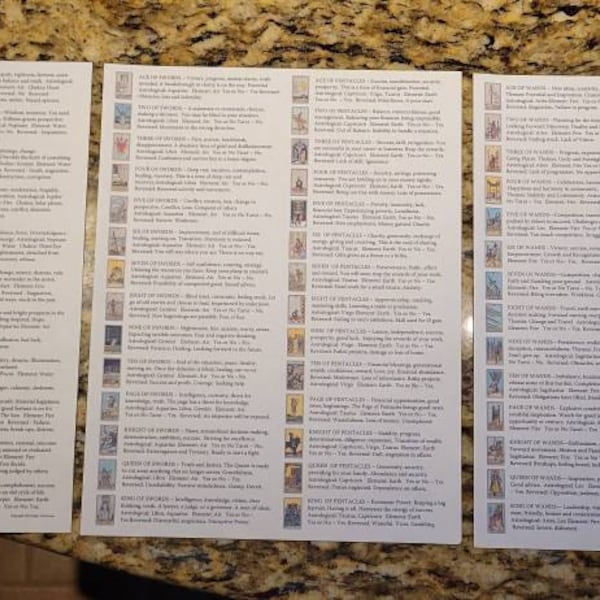
While the Major Arcana deals with life’s grand themes, the Minor Arcana focuses on the nuances of daily existence. Divided into four suits—Cups, Pentacles, Swords, and Wands—each suit corresponds to an element (water, earth, air, fire) and governs different aspects of life. Cups, for instance, are tied to emotions, relationships, and creativity, while Pentacles represent material wealth, health, and practicality. Swords delve into intellect, conflict, and communication, while Wands embody passion, ambition, and inspiration.
The Minor Arcana cards are further divided into numbered cards (Ace through 10) and court cards (Page, Knight, Queen, King). The numbered cards reflect the ebb and flow of experiences, from the raw potential of the Ace to the completion of the 10. The court cards, on the other hand, personify different personality traits or people in our lives. For example, the Queen of Cups might represent a nurturing, empathetic individual, while the Knight of Swords could symbolize a driven, assertive force. Together, these cards paint a vivid picture of the human experience, offering insights into relationships, career, and personal growth.
Reading the Cards: Intuition Meets Structure
Tarot reading is both an art and a science, blending structured symbolism with intuitive interpretation. While the meanings of the cards provide a foundation, the true magic lies in how they resonate with the seeker. A skilled reader doesn’t just recite definitions; they attune to the energy of the cards and the questions posed, allowing the messages to unfold organically. For instance, a Three of Cups in a reading might traditionally signify celebration and friendship, but if the seeker is grieving, the card could also highlight the importance of community and shared joy as a healing force.
There are countless tarot spreads—layouts of cards that provide context and depth to a reading. The simplest is the single-card pull, which offers a snapshot of the current energy or advice for the day. The Celtic Cross, a classic 10-card spread, delves into complex situations, exploring past influences, present challenges, and future possibilities. Each position in a spread acts as a lens, focusing the reader’s attention on specific aspects of the question. The key to a meaningful reading is not just the cards themselves, but the synergy between the reader’s intuition and the seeker’s personal journey.
The Language of Symbols: Decoding the Visual Poetry
Tarot cards are rich with symbolism, each element—colors, animals, objects—carrying layers of meaning. For example, the color red often signifies passion, action, or danger, while blue evokes calmness, intuition, or spirituality. Animals, too, play a crucial role: the owl in The High Priestess suggests wisdom and mystery, while the lion in Strength represents courage and inner power. Even the positioning of figures can alter a card’s message. In The Lovers, the two figures may represent a romantic union, but they can also symbolize a choice between two paths or the union of opposing forces within oneself.
Understanding these symbols requires both study and contemplation. Many tarot decks, such as the Rider-Waite-Smith or Thoth decks, have become standards for their intricate and meaningful imagery. However, every deck offers a unique perspective, from the whimsical to the esoteric. Exploring different decks can deepen your connection to the cards and reveal new layers of interpretation. The beauty of tarot lies in its adaptability—it speaks to each person in a way that is uniquely their own.
Tarot in Modern Life: A Tool for Empowerment
In today’s fast-paced world, tarot offers a sanctuary for reflection and self-discovery. It’s a practice that encourages mindfulness, helping individuals navigate life’s uncertainties with clarity and confidence. Whether used for personal growth, creative inspiration, or decision-making, tarot serves as a compass, guiding us through the fog of doubt and indecision. For artists, writers, and thinkers, the cards can spark creativity, offering fresh perspectives and unexpected insights. In times of crisis, tarot can provide solace, reminding us that even in darkness, there is potential for transformation.
Moreover, tarot fosters a deeper connection to the collective unconscious—a term coined by Carl Jung to describe the shared reservoir of human experience. By engaging with the archetypes of the tarot, we tap into a universal language that transcends culture and time. This connection can be profoundly healing, especially in a world that often feels fragmented and disconnected. Tarot invites us to slow down, to listen to our inner voice, and to trust in the wisdom that resides within us all.
Conclusion
Tarot is far more than a divination tool—it’s a gateway to self-awareness, a catalyst for change, and a testament to the enduring power of symbolism. Whether you’re drawn to its artistic beauty, its psychological depth, or its spiritual guidance, tarot offers something for everyone. As you explore the cards, remember that their true magic lies not in predicting the future, but in illuminating the present. They challenge us to confront our fears, embrace our strengths, and navigate life’s journey with courage and curiosity. So, shuffle the deck, lay out the cards, and let the wisdom of the tarot unfold before you. The adventure has only just begun.
FAQ
What is tarot?
Tarot is a deck of cards used for divination and self-reflection, consisting of 78 cards divided into the Major and Minor Arcana.
How do I read tarot cards?
Reading tarot involves interpreting the symbolism of the cards in relation to the seeker’s question and personal journey.
What do the Major Arcana cards represent?
The Major Arcana cards represent significant life themes and lessons, such as love, betrayal, and enlightenment.
What do the Minor Arcana cards represent?
The Minor Arcana cards reflect everyday experiences and are divided into four suits: Cups, Pentacles, Swords, and Wands.
Leave a Reply