Short Answer
Have you ever paused to wonder why the sun and moon—two celestial bodies that govern our days and nights—have captivated human imagination for millennia? These symbols appear in art, mythology, astrology, and even modern branding, yet their meanings stretch far beyond mere decoration. In this guide, you’ll explore the profound significance of the sun and moon symbols, uncover their cultural, spiritual, and psychological layers, and discover why they continue to fascinate us today. By the end, you’ll see these icons not just as celestial objects, but as mirrors reflecting humanity’s deepest hopes, fears, and quests for balance.
The Sun: Symbol of Life, Power, and Vitality
The sun is often the first symbol we associate with warmth, energy, and life itself. In ancient civilizations, it was worshipped as a deity—Ra in Egypt, Helios in Greece, and Inti in Inca culture—each embodying the sun’s life-giving power. The sun’s daily journey across the sky mirrored the cycle of birth, growth, and renewal, making it a universal symbol of vitality and endurance.
In modern contexts, the sun represents clarity, success, and ambition. It’s no coincidence that many cultures associate the sun with masculinity, authority, and action. In astrology, the sun sign defines core personality traits, while in alchemy, it symbolizes the purifying and transformative power of gold. The sun’s golden hue also connects it to wealth, enlightenment, and the divine spark within all living things.

The Moon: Embodying Mystery, Intuition, and Cycles
While the sun shines with bold, unyielding light, the moon offers a softer, more enigmatic presence. Its phases—from crescent to full—have long been tied to the rhythms of nature: tides, menstruation, and the ebb and flow of life. In many traditions, the moon symbolizes femininity, intuition, and the subconscious mind. It’s the realm of dreams, emotions, and the unseen forces that guide us.
In mythology, the moon often appears as a dual entity—both nurturing (like the Roman goddess Luna) and destructive (like the Greek goddess Hecate). This duality reflects the moon’s role in astrology, where it governs intuition, creativity, and emotional depth. The moon’s silver glow has also made it a symbol of magic, mystery, and the cyclical nature of existence. Unlike the sun’s fixed path, the moon’s changing appearance reminds us that life is fluid, and endings are always followed by new beginnings.

The Sun and Moon Together: A Dance of Opposites
The pairing of the sun and moon is one of the most enduring symbolic duos in human history. Together, they represent the balance between opposing forces: light and dark, action and reflection, logic and intuition. In many cultures, this duality is sacred. For example, in Chinese philosophy, the sun (yang) and moon (yin) embody the fundamental balance of the universe, where harmony arises from their interplay.
In alchemy, the sun and moon symbolize the union of opposites—the alchemical marriage that leads to transformation and enlightenment. This concept is echoed in modern psychology, where the sun might represent the conscious mind and the moon the unconscious, working in tandem to shape our identity. Even in popular culture, the sun and moon appear as complementary forces, from the yin-yang symbol to the dual protagonists in stories like *Dr. Jekyll and Mr. Hyde* or *Batman and the Joker*.
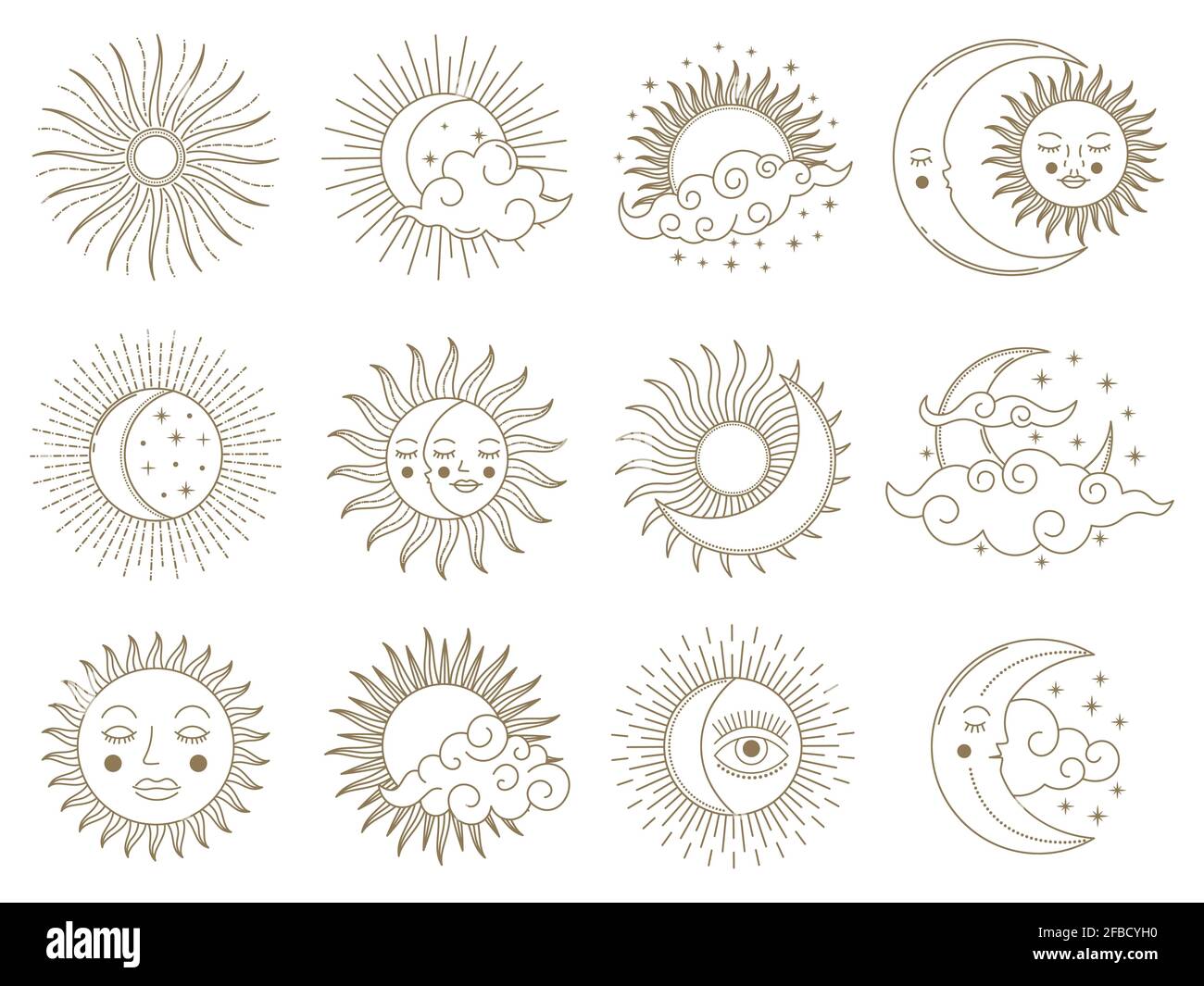
Why Are We Still Fascinated by These Symbols?
The enduring appeal of the sun and moon symbols lies in their ability to reflect our own inner worlds. In a fast-paced, digital age, we crave the simplicity of these ancient icons—the sun’s unwavering presence and the moon’s gentle, ever-changing nature. They offer comfort in their predictability and mystery in their depth. Moreover, their duality resonates with our modern struggles: finding balance between work and rest, logic and emotion, individuality and connection.
Psychologically, the sun and moon also tap into archetypal patterns described by Carl Jung. The sun can symbolize the “hero’s journey”—our drive to achieve and conquer—while the moon represents the “shadow self,” the parts of us we hide or suppress. Together, they remind us that wholeness comes from embracing both our light and dark sides.
Conclusion
The sun and moon are far more than celestial bodies; they are timeless symbols that speak to the core of human experience. Whether as deities, psychological metaphors, or design elements, they remind us of life’s cycles, the balance between opposites, and the eternal dance of light and shadow. Next time you see these symbols—on a flag, in a logo, or in a piece of art—pause to consider what they might be whispering to you. In their simplicity lies a profound truth: that light and dark, action and rest, are not just cosmic phenomena, but essential threads woven into the fabric of our lives.
FAQ
What do the sun and moon symbolize?
The sun symbolizes life, power, and vitality, while the moon embodies mystery, intuition, and cycles.
How do the sun and moon represent balance?
The sun and moon together symbolize the balance between opposing forces such as light and dark, action and reflection.
Leave a Reply