Short Answer
Have you ever wondered what happens at the moment of death? Beyond the physical cessation of life, many traditions and beliefs suggest that death is not an end but a transition—a shift in consciousness or location. This guide explores the profound concept of “death location meanings,” where the soul or essence of a person goes after life ends. You’ll uncover ancient wisdom, spiritual insights, and thought-provoking perspectives that challenge conventional views. Prepare to have your curiosity piqued as we delve into what lies beyond the final breath.
Understanding the Concept of Death Locations
The idea that death leads to a specific “location” is deeply rooted in religious, philosophical, and metaphysical traditions. Unlike the purely scientific view of death as the end of biological function, many cultures describe death as a journey to another realm—whether it’s heaven, hell, purgatory, or an intermediate state. These locations are often depicted as spiritual dimensions where the soul resides based on its earthly deeds, beliefs, or unresolved matters.
For instance, in Christianity, death is often seen as a passage to either eternal life in heaven or separation from God in hell. In Hinduism, the soul may reincarnate or move through different planes of existence based on karma. Meanwhile, some New Age philosophies suggest that the afterlife is a non-physical realm where consciousness continues in a different form. These varying perspectives highlight that the “location” of death is not a one-size-fits-all concept but a deeply personal and culturally influenced experience.
The Biblical Perspective: Where Do We Go After Death?
The Bible offers several intriguing insights into what happens after death, painting a picture of temporary and eternal destinations. One key concept is the “intermediate state,” where the soul exists in a conscious but non-physical form before the final resurrection. For believers, this state is often described as being “with the Lord” (2 Corinthians 5:8) or in a place of rest (Revelation 14:13).
Another biblical theme is the separation of the righteous and the wicked. Jesus’ parable of the rich man and Lazarus (Luke 16:19-31) depicts a chasm between two post-death locations: one of comfort for Lazarus and one of torment for the rich man. This story underscores the idea that death leads to distinct spiritual realms based on one’s life choices. Additionally, the concept of the “New Jerusalem” (Revelation 21) suggests an ultimate destination where God dwells with humanity in a perfected state.
Exploring the Intermediate State: A Temporary Holding Place?
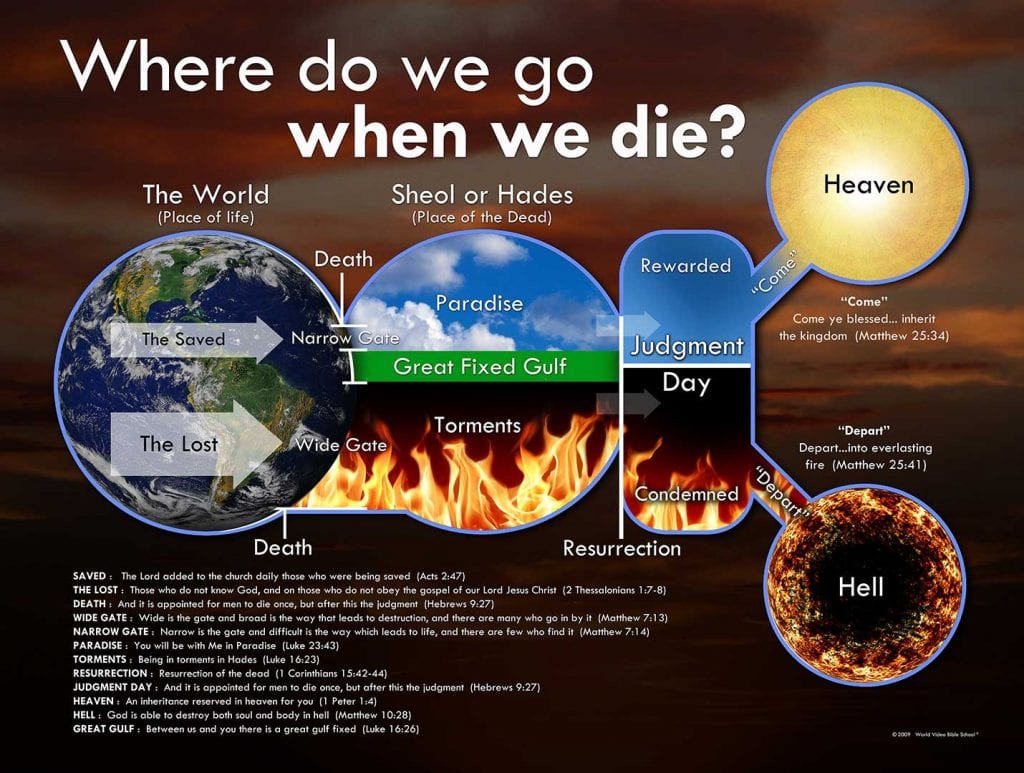
Many traditions propose that after death, the soul enters an intermediate state—a temporary realm where it awaits final judgment or rebirth. In Christianity, this is sometimes called “paradise” or “Abraham’s bosom,” a place of rest and peace for the righteous (Luke 23:43). In Islam, the intermediate state is known as “Barzakh,” a barrier between the physical and spiritual worlds where the soul experiences preliminary rewards or punishments based on deeds.
Hinduism and Buddhism also embrace the idea of an intermediate state through the concept of “antarabhava” (the intermediate existence) or “bardo” (the transitional state in Tibetan Buddhism). During this period, the soul is said to review its past life, face karmic consequences, and prepare for rebirth. These traditions suggest that death is not a finality but a pause in an eternal cycle of existence.
Heaven, Hell, and Beyond: The Eternal Destinations
The most vivid depictions of death locations come from the concepts of heaven and hell—eternal realms where souls are believed to reside based on their spiritual alignment. Heaven is often portrayed as a place of divine presence, peace, and reunion with loved ones, while hell is depicted as a state of separation from God, suffering, or purification. These destinations are not always physical places but symbolic representations of one’s relationship with the divine.
Some traditions expand on these ideas by introducing additional realms, such as purgatory in Catholicism—a temporary state of purification for souls not yet ready for heaven. In contrast, other belief systems propose that all souls eventually merge with a universal consciousness or achieve enlightenment, transcending the need for distinct locations. The diversity of these views reflects humanity’s enduring quest to understand the mystery of what lies beyond death.

Modern Interpretations: Science, Consciousness, and the Afterlife
In recent years, scientific and philosophical explorations have begun to intersect with ancient beliefs about death locations. Near-death experiences (NDEs), for example, often describe vivid encounters with light, tunnels, or deceased loved ones—phenomena that align with descriptions of the afterlife in various traditions. While skeptics attribute these experiences to brain chemistry, others argue that they hint at a consciousness that transcends physical death.
Quantum physics and theories of consciousness also challenge the materialist view of death as absolute annihilation. Some researchers propose that consciousness may exist independently of the brain, suggesting that death could be a transition rather than an end. These modern perspectives invite us to reconsider the rigid boundaries between life and death, opening the door to a more expansive understanding of where the “end” truly happens.
Conclusion
The concept of death location meanings offers a profound shift in perspective—one that transforms death from a final curtain into a doorway to another realm. Whether viewed through religious, spiritual, or scientific lenses, the idea that consciousness continues beyond physical demise invites curiosity and reflection. From the biblical intermediate state to the karmic cycles of Eastern traditions, and from the vivid depictions of heaven and hell to the modern exploration of consciousness, the journey after death is as diverse as humanity itself.
As you ponder these ideas, consider what your own beliefs about death’s location might be. Is it a place of judgment, reunion, or transformation? The answer may lie not in certainty but in the willingness to explore the mystery—and perhaps, in doing so, find a deeper understanding of life’s ultimate purpose.
FAQ
What is meant by 'death location'?
Death location refers to the believed place or state where the soul or consciousness goes after physical death, varying across religious and spiritual traditions.
What is the intermediate state after death?
The intermediate state is a temporary realm where the soul rests or awaits final judgment before moving to its eternal destination, recognized in many faiths such as Christianity, Islam, Hinduism, and Buddhism.
Do modern scientific views support the idea of death locations?
Some modern scientific and philosophical theories, including studies of near-death experiences and consciousness, suggest possibilities that challenge the idea of death as final, though these remain debated.
Leave a Reply