Short Answer
The Death card in the Tarot is often misunderstood as a symbol of literal death or destruction. However, its true essence lies in transformation, rebirth, and the natural cycles of life. In this guide, you’ll discover the hidden power of the Death card, how it promises a shift in perspective, and why it piques curiosity about the inevitable endings that lead to profound growth. By the end, you’ll see this card not as a harbinger of doom, but as a catalyst for renewal and personal evolution.
The Death Card: More Than Meets the Eye
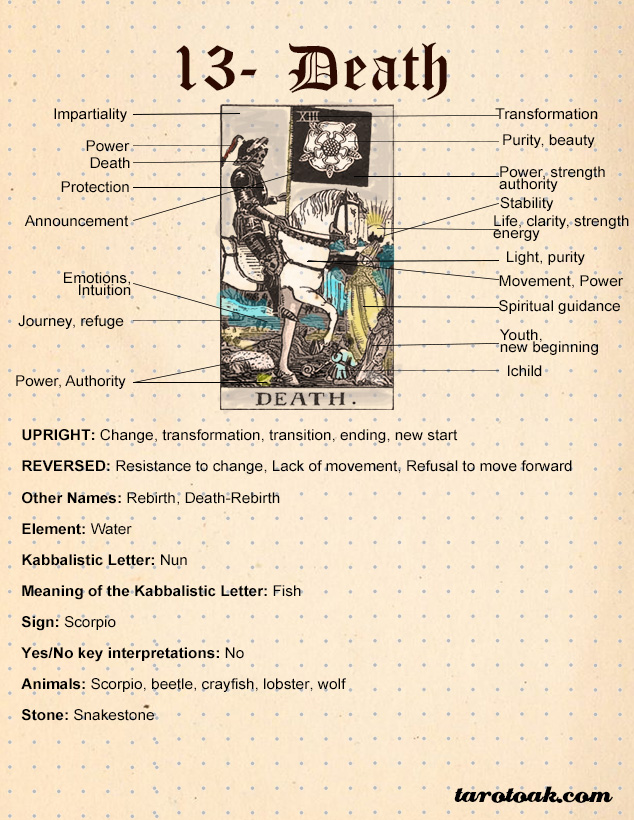
The Death card, numbered XIII in the Major Arcana, is one of the most feared cards in the Tarot deck. Its skeletal figure riding a white horse, often holding a black banner, evokes images of decay and loss. Yet, this imagery is purely symbolic. The Death card represents the end of one phase to make way for another, much like the changing seasons or the shedding of a snake’s skin. It’s a reminder that endings are not final—they are necessary for growth.
At its core, the Death card embodies transformation. It signals the collapse of old structures, beliefs, or relationships that no longer serve you. This could manifest as a career change, the end of a toxic relationship, or a shift in personal identity. The card doesn’t promise pain—it promises release. By embracing what must end, you create space for what’s meant to begin.
Consider the natural world: trees shed their leaves in autumn to prepare for new growth in spring. The Death card mirrors this process. It’s not about destruction for its own sake; it’s about evolution. When you resist endings, you stagnate. When you accept them, you open the door to transformation.
Why the Death Card Promises a Shift in Perspective
The Death card is a wake-up call—a cosmic nudge to examine your life with honesty. It challenges you to ask: What no longer aligns with my highest good? This shift in perspective can feel jarring, especially if you’ve been clinging to familiarity. Yet, it’s often in these moments of discomfort that the most profound growth occurs.
Imagine you’re holding onto a job that drains your energy, a habit that harms your health, or a relationship that stifles your joy. The Death card appears to say: “It’s time to let go.” This isn’t a punishment—it’s an invitation to realign with your true path. The card’s energy pushes you to release what’s weighing you down, even if the process feels uncomfortable at first.
For example, someone stuck in a dead-end career might draw the Death card and realize it’s time to pursue a passion they’ve ignored. Or a person in a codependent relationship may see the card as a sign to set boundaries. The Death card doesn’t provide easy answers, but it demands honesty. It forces you to confront the truth about what’s serving you—and what isn’t.
This shift in perspective isn’t just about big life changes. It can also apply to smaller, daily shifts. Are you holding onto grudges? The Death card encourages you to release them. Are you afraid of change? The card reminds you that change is the only constant. By embracing this perspective, you cultivate resilience and adaptability.
The Curiosity Sparked by the Death Card
The Death card has a unique ability to pique curiosity. Unlike other Tarot cards that offer clear advice, the Death card is enigmatic. It doesn’t tell you what to do—it asks you to explore. This ambiguity can be unsettling, but it’s also what makes the card so powerful. It invites you to dive deeper into your subconscious and ask questions you might have avoided.
For instance, if you draw the Death card in a reading about your love life, you might wonder: Is this relationship truly over, or am I just afraid of commitment? The card doesn’t give a yes or no answer, but it encourages self-reflection. It pushes you to examine your fears, desires, and patterns. This curiosity can lead to breakthroughs you never expected.
The Death card also sparks curiosity about the unknown. Endings are scary because they represent the unfamiliar. What will come after? The card doesn’t promise a specific outcome, but it assures you that the unknown holds possibility. This sense of mystery can be thrilling if you approach it with an open mind. Instead of fearing the void, you start to see it as a blank canvas waiting to be painted.
In readings, the Death card often appears when you’re on the cusp of a major life transition. It might signal a move, a breakup, or a spiritual awakening. The curiosity it inspires can motivate you to seek answers, whether through introspection, therapy, or simply observing the changes around you. The card acts as a compass, pointing you toward growth even when the path isn’t clear.
How to Harness the Death Card’s Power for Growth
Understanding the Death card’s symbolism is one thing—applying its lessons is another. To harness its power for growth, you must be willing to lean into the endings it represents. Here’s how you can do that:
- Release What No Longer Serves You: Identify habits, relationships, or beliefs that are holding you back. Write them down and symbolically “let them go” through a ritual like burning the paper or burying it in soil.
- Embrace Change as a Natural Process: Instead of resisting change, practice seeing it as a part of life’s cycle. Ask yourself: What can I learn from this transition?
- Reframe Your Narrative: Instead of viewing endings as failures, see them as necessary steps toward something better. For example, a failed business might lead to a more fulfilling career.
- Stay Open to New Beginnings: The Death card doesn’t just bring endings—it brings rebirth. Stay curious about what’s next. Journal about your hopes for the future or create a vision board to visualize your goals.
- Practice Gratitude for the Past: Even if an ending is painful, acknowledge the lessons it taught you. Gratitude softens the blow and helps you move forward with grace.
Remember, the Death card isn’t about forcing change—it’s about allowing it. Sometimes, the best thing you can do is surrender to the process and trust that the universe has a plan, even if it’s not immediately clear.
Common Misconceptions About the Death Card
Despite its positive message, the Death card is often shrouded in misconceptions. One of the biggest is the belief that it predicts physical death. In reality, the card is about metaphorical death—the end of a cycle, not a person’s literal demise. Tarot readers emphasize that the Death card is rarely literal unless other cards in the spread strongly suggest it.
Another misconception is that the Death card is always negative. While it can indicate loss or upheaval, its primary message is transformation. The card’s energy is neutral—it’s how you interpret and respond to it that determines whether the outcome is positive or negative. If you resist the change, you’ll experience struggle. If you embrace it, you’ll find renewal.
Some people also associate the Death card with failure. They see it as a sign that their efforts will crumble. However, the card is more about shedding what’s no longer viable than about defeat. For example, ending a project that isn’t working isn’t a failure—it’s a strategic move to conserve energy for something better.
Lastly, the Death card is sometimes seen as a warning to avoid risks. In truth, it encourages calculated risks. It asks you to let go of what’s safe but stagnant in favor of what’s uncertain but potentially transformative. The card’s energy is about courage—the courage to face the unknown and trust the process.
Conclusion
The Death card is a paradox—a symbol of endings that lead to beginnings. It promises a shift in perspective by forcing you to confront what no longer serves you, and it piques curiosity by inviting you to explore the unknown. Rather than fearing its appearance in a reading, see it as a sign that transformation is on the horizon. Endings are not the enemy; they are the necessary precursors to growth.
To harness the Death card’s power, practice releasing what weighs you down, embrace change as a natural part of life, and stay open to the rebirth that follows. Remember, every ending is a chance to start anew. The Death card doesn’t just mark the close of a chapter—it flips the page to a story you’re meant to write.
FAQ
What does the Death card symbolize in Tarot?
It symbolizes transformation, the end of cycles, and the beginning of new phases in life.
Is the Death card a sign of physical death?
No, it generally indicates metaphorical death and transformation, not physical death.
How can the Death card affect my personal growth?
It encourages releasing old patterns and embracing change to foster personal growth and renewal.
What should I do when I draw the Death card in a reading?
Reflect on what you need to let go of and be open to the new opportunities that endings can bring.
Leave a Reply