Short Answer
Embarking on a journey through the Major Arcana of the Tarot deck, the Death card stands as one of the most misunderstood and feared cards. Often shrouded in misconceptions, this powerful archetype is not about literal demise but about profound transformation, rebirth, and the natural cycles of life. In this guide, you will uncover the true essence of the Death Tarot card, learning how it symbolizes sweeping changes, personal evolution, and the promise of a fresh start. Whether you’re a seasoned reader or a curious beginner, this exploration will shift your perspective, replacing fear with curiosity and insight. Discover how embracing the Death card’s energy can lead to clarity, renewal, and a deeper understanding of life’s inevitable transitions.
The Death Tarot Card: A Symbol of Transformation, Not Fear
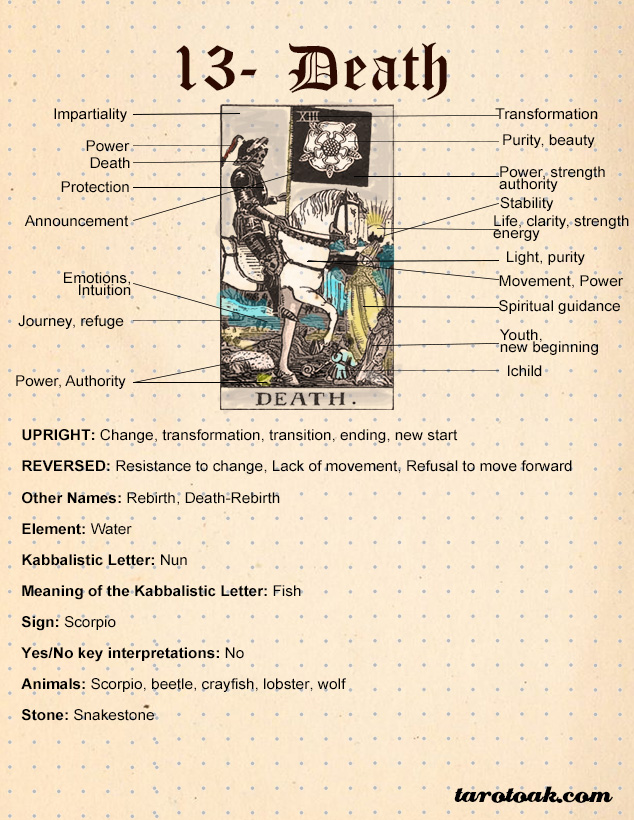
The Death card, numbered XIII in the Major Arcana, is often depicted with a skeletal figure riding a white horse, holding a black banner adorned with a white rose. This imagery may seem ominous at first glance, but it carries a message of profound transformation rather than literal death. The skeletal figure represents the impermanence of life, while the white horse symbolizes purity and the swift, inevitable nature of change. The black banner with a white rose signifies the end of one cycle and the beginning of another, much like the setting sun giving way to dawn.
In Tarot readings, the Death card is a harbinger of major shifts—whether in relationships, careers, or personal beliefs. It signals the need to release old patterns, habits, or situations that no longer serve your highest good. This card encourages you to embrace change as a natural and necessary part of growth, reminding you that endings are merely the precursors to new beginnings. By reframing your perspective, you can see the Death card not as a threat but as an opportunity for reinvention and renewal.

Key Themes of the Death Tarot Card: What It Truly Represents
The Death card is rich with symbolism, each element offering deeper insight into its meaning. Here are the key themes associated with this powerful archetype:
- Endings and Closures: The Death card signifies the conclusion of a chapter in your life. This could be the end of a relationship, a job, a phase of personal growth, or even a belief system that no longer aligns with your truth. While endings can be painful, they are essential for making space for new experiences and opportunities.
- Transformation and Rebirth: Just as the seasons change, so too do we. The Death card represents the process of shedding your old self to make way for a renewed, evolved version of yourself. This transformation is not always easy, but it is necessary for personal growth and self-discovery.
- Release and Letting Go: Holding onto the past can weigh you down, preventing you from moving forward. The Death card urges you to release what no longer serves you—whether it’s a toxic relationship, a stagnant career, or self-limiting beliefs. Letting go creates space for new energy and possibilities to flow into your life.
- Change and Adaptability: Life is constantly evolving, and the Death card reminds you to embrace change rather than resist it. Adaptability is a key theme, encouraging you to flow with the natural rhythms of life rather than clinging to what feels familiar and safe.
- Purification and Cleansing: The imagery of the white rose on the black banner suggests a process of purification. The Death card can indicate a time of spiritual cleansing, where you release negativity and make room for positivity and light to enter your life.
How the Death Tarot Card Appears in Readings: Context Matters
The meaning of the Death card can vary significantly depending on its position in a spread and the surrounding cards. Here’s how to interpret its presence in different contexts:
Upright Death Card: When the Death card appears upright in a reading, it is a clear sign that transformation is on the horizon. This could manifest as a major life change, such as a career shift, a move to a new location, or the end of a long-term relationship. The upright Death card encourages you to embrace this change with an open heart and mind, trusting that it will lead to growth and renewal. It may also indicate a spiritual awakening or a deepening of your intuition as you shed old layers of yourself.
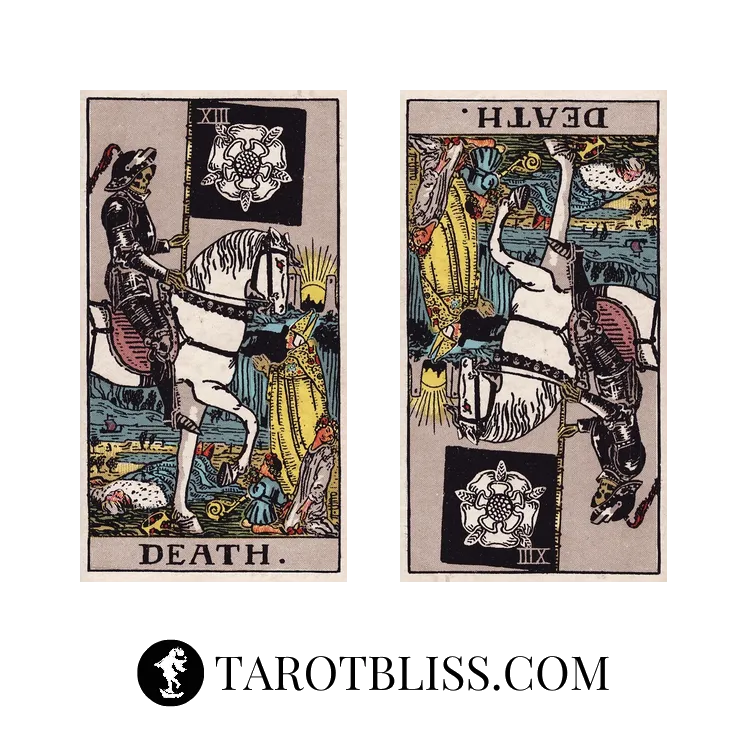
Reversed Death Card: When the Death card appears reversed, it suggests resistance to change or an unwillingness to let go of the past. You may be clinging to familiar but unhealthy patterns, or you might be avoiding necessary endings out of fear or denial. The reversed Death card can also indicate stagnation, where you feel stuck in a rut and unable to move forward. This is a call to reflect on what is holding you back and to take proactive steps toward releasing what no longer serves you. It may also signal a delayed transformation, where the changes you need are coming, but not yet fully realized.
Common Misconceptions About the Death Tarot Card
The Death card is often one of the most misunderstood cards in the Tarot deck, largely due to its name and imagery. Here are some common misconceptions and the truths behind them:
- Misconception: The Death card predicts physical death.
Truth: While the Death card can indicate a literal ending, it rarely refers to physical death unless the surrounding cards strongly suggest it. More often, it symbolizes the end of a cycle, a phase, or a way of life. It is about transformation, not demise. - Misconception: The Death card is always negative.
Truth: The Death card is neither good nor bad; it is neutral. Its energy is about change, and whether that change is perceived as positive or negative depends on your perspective. Embracing the Death card’s energy can lead to profound personal growth and new opportunities. - Misconception: The Death card means everything will fall apart.
Truth: While the Death card signals significant change, it does not mean your life will crumble. Instead, it indicates that old structures are making way for new ones. This can be unsettling, but it is ultimately for your highest good. - Misconception: You can avoid the Death card’s energy.
Truth: Change is inevitable, and resisting it only prolongs the process. The Death card reminds you that transformation is a natural part of life, and fighting it will only cause more pain. By surrendering to the process, you can navigate change with grace and resilience.
Practical Ways to Work with the Death Tarot Card’s Energy
The Death card’s energy can be harnessed to facilitate personal growth and transformation. Here are some practical ways to work with its energy in your daily life:
- Journaling: Reflect on areas of your life where you feel stuck or resistant to change. Write about what you need to release and what you hope to invite into your life. Journaling can help you clarify your intentions and process your emotions around transformation.
- Meditation and Visualization: Spend time in meditation focusing on the Death card’s imagery. Visualize yourself releasing old patterns and embracing new beginnings. You can also create a vision board that represents the changes you wish to manifest.
- Rituals for Release: Perform a ritual to symbolize letting go of what no longer serves you. This could be burning old letters, donating items you no longer need, or writing a letter to yourself about what you are ready to release. Rituals can help you honor the process of transformation.
- Embracing Change: Look for opportunities to step out of your comfort zone. Whether it’s trying a new hobby, traveling to a unfamiliar place, or making a bold career move, embracing change can help you align with the Death card’s energy.
- Self-Reflection: Ask yourself what beliefs, habits, or relationships are holding you back. The Death card encourages deep self-reflection, so take time to examine your life with honesty and compassion. What parts of yourself are ready to evolve?
Death Tarot Card in Love, Career, and Spirituality
The Death card’s influence extends to various areas of life, offering insights into love, career, and spirituality. Here’s how it may manifest in different contexts:
Love: In a love reading, the Death card can indicate the end of a relationship that is no longer serving you. This could be a breakup, a divorce, or simply the realization that a partnership has run its course. While this may be painful, it is necessary for your growth. The Death card can also signal a transformation in your approach to love, encouraging you to release old patterns and embrace a healthier, more fulfilling dynamic.
Career: In career readings, the Death card may suggest a need for change in your professional life. This could mean leaving a job that no longer aligns with your values, pursuing a new career path, or even starting your own business. The Death card reminds you that endings in your career are opportunities to reinvent yourself and find work that is more meaningful and aligned with your purpose.

Spirituality: Spiritually, the Death card represents a deepening of your connection to the divine and a shedding of old belief systems. It may indicate a spiritual awakening or a call to release dogma and embrace a more authentic, personal spirituality. The Death card encourages you to trust your intuition and explore new spiritual practices that resonate with your soul’s journey.
Conclusion
The Death Tarot card is a powerful reminder that transformation is an essential part of the human experience. Far from being a card of fear, it is a beacon of hope, signaling the end of one chapter and the beginning of another. By embracing its energy, you can release what no longer serves you, make space for new opportunities, and step into a brighter, more authentic future. Whether you encounter the Death card in a reading or simply reflect on its symbolism, remember that change is not something to fear but something to welcome with open arms. As you navigate life’s inevitable transitions, let the Death card guide you toward growth, renewal, and the endless possibilities that lie ahead.
FAQ
What does the Death card represent in Tarot?
It represents transformation, endings, and new beginnings, not literal death.
Is the Death card a bad omen?
No, it symbolizes necessary change and growth, which can be positive.
How should I interpret the Death card in a reading?
Consider the context and position; generally, it signals the end of a phase and the start of a new one.
Can the Death card indicate physical death?
Only rarely, and only if supported by surrounding cards.
Leave a Reply