Short Answer
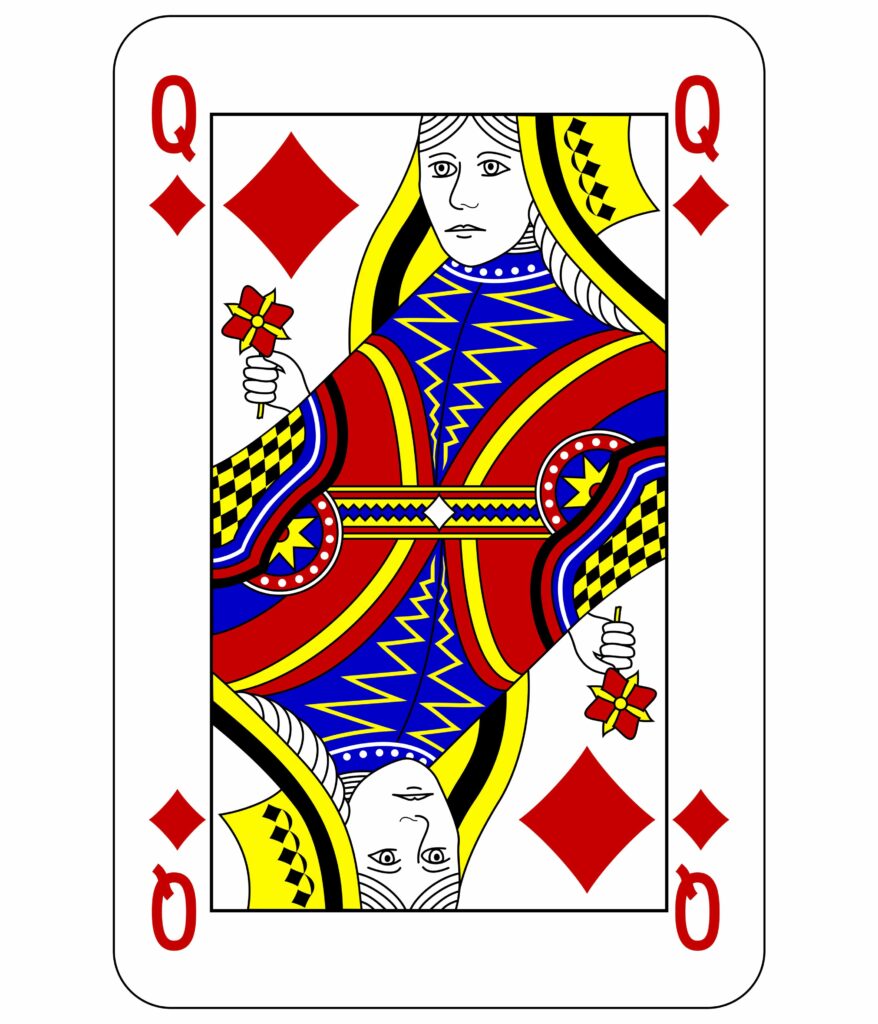
The Queen of Diamonds, a lesser-discussed card in the tarot deck, emerges as a compelling symbol when viewed through the lens of Christian values. While the world of tarot may seem to diverge from traditional Christian teachings, an exploration of the Queen of Diamonds reveals a richness that can be harmoniously aligned with Christian principles of stewardship, responsibility, and divine empowerment.
At first glance, the Queen of Diamonds is often associated with material wealth, prosperity, and success. In the Christian context, however, these attributes require a nuanced interpretation. The biblical narrative frequently reflects upon wealth, cautioning against the perils of greed while simultaneously endorsing the importance of being responsible stewards of what one possesses. This duality embodies the essence of the Queen of Diamonds—a figure who wields resources with integrity, compassion, and wisdom.
The Queen symbolizes maternal nurturing and guidance, reflecting the Christian ideal of love and support within community and family. Her diamond signifies clarity in thought and action, often delivering a straightforward message: to use one’s gifts for the greater good. Just as the Queen invests her energies into her kingdom, Christians are called to invest their abilities and resources in service to others, fostering a sense of unity and purpose.
Delving deeper into this metaphor, consider the diamond itself. This precious stone, formed under immense pressure, symbolizes resilience and strength. It conjures images of the trials faced by many biblical figures, from Job’s endurance through suffering to Joseph’s persevering faith amidst betrayal. In paralleling the Queen of Diamonds with these figures, one uncovers a fundamental lesson of Christianity: that trials refine character, leading to a life imbued with authentic faith and courage.
From a more practical standpoint, the Queen of Diamonds invites reflection on the role of women in both the tarot and the Christian tradition. Her presence in the tarot signifies empowerment and independence, traits that are increasingly celebrated in modern interpretations of biblical female figures. Women like Ruth, Esther, and Mary—the mother of Jesus—exemplify qualities of service, wisdom, and strength. The Queen of Diamonds thus becomes a representation of these virtues, celebrating the influence of women as bearers of light and love in their communities.
In the realm of personal prosperity, the Queen of Diamonds encourages individuals not to view success in isolation. In a world often driven by competition and individualism, this card serves as a gentle reminder that true wealth is measured by the impact one has on others. Like the parable of the talents, where stewardship of resources leads to fruitful returns, the Queen beckons believers to cultivate their gifts—not merely for personal gain but for the enrichment of the spiritual community. Her reign invites us to acknowledge the interconnectedness of our fortunes, urging a shift from individual acquisition to collective flourishing.
Yet, alongside this call to productivity, the Queen of Diamonds also embodies a spirit of temperance. Wealth isn’t synonymous with extravagance; instead, it embraces the notion of sufficiency and generosity. This resonates with the Christian teaching of moderation. It acknowledges the importance of sharing blessings, reminding believers that richness in spirit often outweighs material abundance. The Queen’s ability to maintain balance between indulgence and responsibility serves as an example of living a life that mirrors Christ’s teachings on love, sacrifice, and humility.
Moreover, the visual representation of the Queen of Diamonds—often adorned in colors representing abundance, such as green and gold—serves as a vibrant tapestry reflecting divine providence. In scripture, God’s provision is abundantly clear, echoed in verses such as Philippians 4:19: “And my God will meet all your needs according to the riches of his glory in Christ Jesus.” This reinforces the idea that while the accumulation of treasure can bring joy, it is ultimately the spiritual wealth bestowed by God that provides sustainable fulfillment.
In interpreting the Queen of Diamonds within a Christian framework, one must confront the challenges posed by societal definitions of success. The allure of materialism often entices believers away from the virtues Jesus exhibited during His time on Earth. The wealth exemplified by the Queen is not merely a display of luxury but rather a manifestation of God’s blessings that ought to be shared. It urges individuals to reflect on their definitions of success: is it measured in bank accounts, or is it found in the love shared, the service rendered, and the growth fostered within one’s community?
Ultimately, the Queen of Diamonds stands as a multifaceted emblem, embodying resilience, empowerment, and the vital act of stewardship. Her lessons echo throughout Christian tenets, advocating for a uniqueness in approach—a blend of ambition grounded in a spirit of compassion and generosity. As believers reconcile the teachings of Christ with their own life paths, the presence of the Queen motivates them to embrace a responsible and enriched journey filled with purpose, love, and a profound understanding of what it truly means to be wealthy in spirit.
In conclusion, the exploration of the Queen of Diamonds through a Christian perspective highlights her unique appeal. She serves as a bridge between material and spiritual wealth, emphasizing the importance of using one’s gifts while nurturing a generous spirit. This harmonious union encapsulates the essence of both tarot and Christian teachings, inviting believers to reflect, grow, and serve in all areas of life.
FAQ
What is the general meaning of the Queen of Diamonds tarot card?
The Queen of Diamonds generally represents material success, nurturing qualities, and wise management of resources.
How does the Queen of Diamonds relate to Christian values?
It reflects Christian teachings of stewardship, generosity, humility, and using blessings to serve others.
Is the Queen of Diamonds considered a Major Arcana or Minor Arcana card?
The Queen of Diamonds is a Minor Arcana card, corresponding to the suit of Pentacles or Coins.
What lessons can one learn from the Queen of Diamonds?
Lessons include resilience through challenges, balancing ambition with generosity, and valuing spiritual wealth over materialism.

Leave a Reply